Best Motorcycle Jackets for Hot Weather Riding
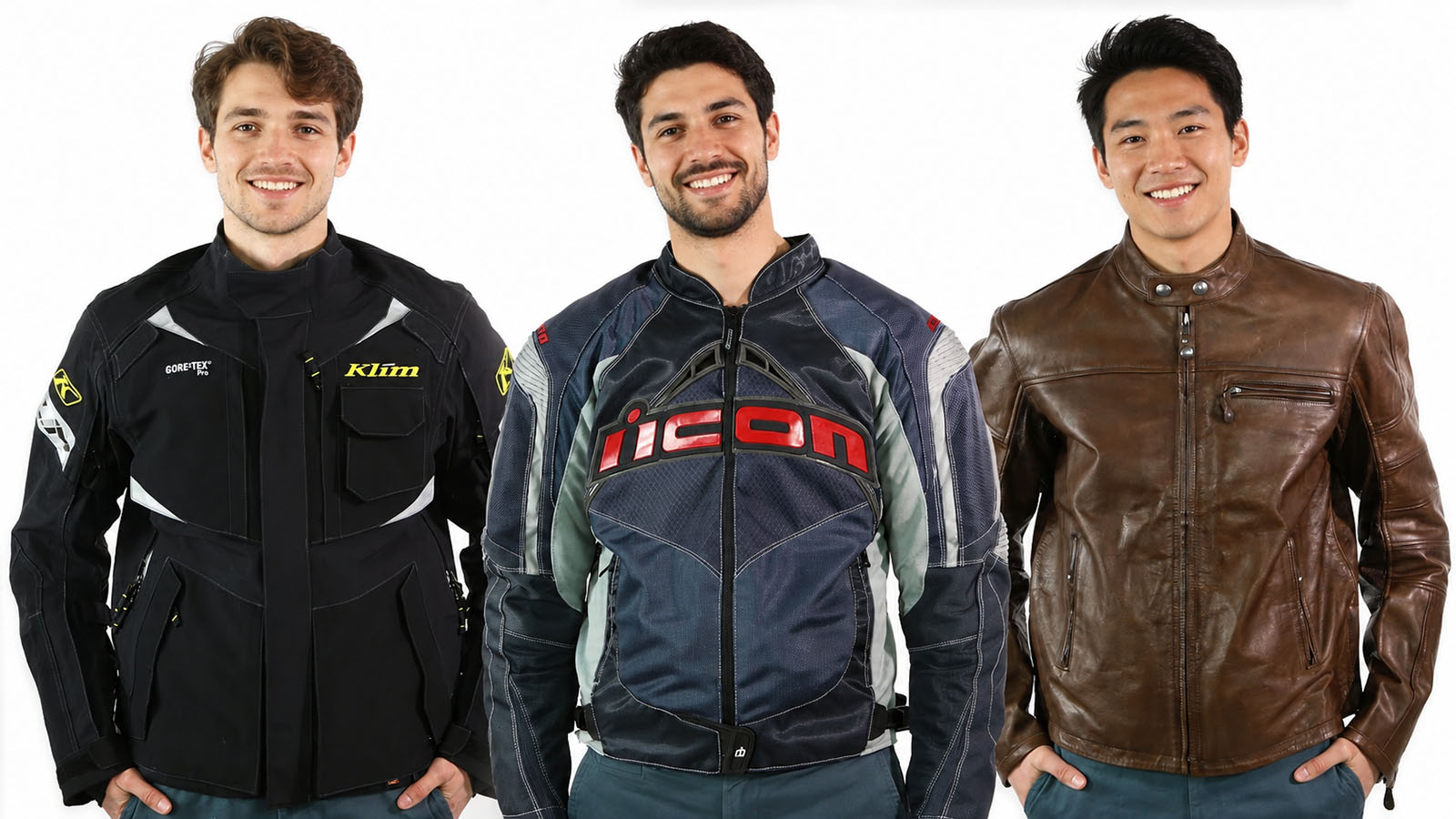
The best motorcycle jacket for hot weather riding has to solve an impossible problem: protect you in a crash while letting enough air through that you don't pass out at traffic lights. In 35°C heat, a closed textile jacket becomes unbearable within minutes. The wrong choice means you stop wearing it — which defeats the entire point.
We compared eight hot-weather jackets on the things that decide the question: mesh panel coverage and airflow construction, CE armour rating (EN 1621-1 and 1621-2), shell abrasion resistance, and what long-term owners report about durability in sustained heat. This is a research-led comparison rather than a hands-on test — see how we research. Here's what works.
What to Look For in a Hot Weather Jacket
Ventilation architecture matters more than material. A leather jacket with a full-length front zipper and mesh panels can outventilate a cheap textile jacket. Don't dismiss leather for hot weather automatically.
CE Level 2 armour at shoulders and elbows. Level 1 is the minimum legal standard in most markets. Level 2 absorbs significantly more impact energy. Back protector should be Level 2 as well — spine injuries are catastrophic and irreversible.
Fit. A hot-weather jacket that billows in the wind creates drag and turbulence. A fitted jacket channels air through properly. Measure your chest and arms before buying.
Mesh vs. perforated vs. vented textile. Pure mesh offers the most airflow but zero rain protection. Perforated leather or textile offers moderate airflow with better abrasion resistance. Vented textile with zip-out liner is the most versatile.
The Best Hot Weather Jackets
Best Overall: Alpinestars T-GP Plus R v3 (~$280)
The T-GP Plus R v3 is what most serious riders end up at after trying cheaper alternatives. The ventilation system uses an intelligent channel design — air enters at the chest, flows over the torso, exits at the back. In motion above 40km/h, you feel the difference immediately.
CE Level 2 certified at shoulders and elbows. The back pocket takes a Level 2 protector (sold separately, worth buying). The jacket is cut for riding position — longer at the back, shorter at the front — which prevents it riding up when you're hunched over the bars.
One complaint: the cuffs are fiddly. Five minutes to put on your gloves properly. Not a dealbreaker, but noted.
Who it's for: Most riders. This is the default recommendation.
Best Mesh: Rev'It! Eclipse 2 (~$180)
If you're riding in genuinely tropical conditions — Singapore, Vietnam, coastal Southeast Asia — mesh is the only honest answer. The Eclipse 2 is the strongest pure-mesh option in this comparison.
The CE Level 2 shoulder and elbow protection is included (not common at this price). The fit is trim without being constricting. The waterproof inner jacket is useless for serious rain but handles light showers adequately.
Fair warning: in mesh, the wind resistance you feel at 100km/h+ becomes significant. Not dangerous, but fatiguing on long motorway stretches.
Who it's for: City riders, commuters, anyone spending most of their time below 80km/h in heat.
Best Budget: Rst Ventilator-X CE (~$130)
Under $150 with CE Level 1 shoulder and elbow armour included. Level 1, not Level 2 — that's the compromise at this price. The ventilation is good for the money and the construction is honest.
If you're a new rider or commuter who wants a proper jacket without spending jacket-level money, this does the job. Upgrade the back protector immediately.
Who it's for: Budget-conscious riders, new riders, urban commuters.
Best Adventure: Klim Baja S4 (~$600)
For riders doing big miles in heat — overlanders, adventure tourers, long-distance commuters — the Baja S4 is in a different league. GORE-TEX waterproofing, outstanding ventilation when open, CE Level 2 throughout, and armour designed for repeated use rather than crash-and-replace.
It costs what it costs. On a three-week ride across Southeast Asia where you're in the saddle 8+ hours daily, the quality justifies the price. For weekend rides, it doesn't.
Who it's for: Serious adventure tourers, overlanders, long-distance riders.
Alpinestars vs Dainese: The Short Version
Both make excellent hot weather jackets. Alpinestars tends to fit slightly slimmer and runs more sporty. Dainese fits broader across the chest and runs more touring-oriented. Try both if you can — fit determines which brand works for your body.
For a closer look at a do-everything hot-weather favourite, read our Klim Marrakesh jacket review.
The Gear Layering System
A hot-weather jacket works best as part of a system. Underneath: a technical riding base layer that wicks sweat away from skin. Underneath that if it's cool enough: a thermal mid-layer. On top of the jacket in rain: a lightweight waterproof shell that packs into a pocket.
This approach works better than a single jacket trying to do everything. The multi-layer system adapts to changing conditions without making you miserable.
What About Airbag Jackets?
D-air, Alpinestars Tech-Air, and Hit-Air systems all work with hot-weather jackets. Airbag vests worn under the jacket add another layer of protection without sacrificing ventilation. Worth serious consideration if you commute in traffic — urban impacts are the most common accident type and the airbag deploys in milliseconds, faster than any traditional armour can respond.
Airbag technology adds cost and requires annual servicing, but the protection level is genuinely different. If you can afford it, look at the Alpinestars Tech-Air 5 vest as a starting point.
The Bottom Line
Best overall: Alpinestars T-GP Plus R v3 — the correct default choice
Best mesh: Rev'It! Eclipse 2 — for genuine tropical conditions
Best budget: RST Ventilator-X CE — honest jacket for less money
Best adventure: Klim Baja S4 — for serious long-distance riders
The most important thing: wear it every ride. An expensive jacket in your bag protects nobody. Buy the best you can afford, make sure it fits, and put it on every time.
Complete your kit with our picks for best motorcycle gloves and the best motorcycle helmets for 2026.
Standards & Sources
Hot-weather jackets involve a direct trade-off between airflow and protection, which is why the certification detail matters more here than in any other category:
- CEN — European Committee for Standardization — publisher of EN 1621-1 (limb impact protectors) and EN 1621-2 (back protectors), the standards behind the Level 1 and Level 2 armour ratings referenced above. Level 2 armour transmits less force under the same test impact than Level 1, generally at the cost of thickness and flexibility.
- EN 17092 is the current standard for motorcycle protective garments, classifying whole jackets from Class AAA (highest abrasion protection) down to Class C (garments that hold armour but offer limited abrasion resistance in themselves). Many mesh summer jackets are Class C or Class B — worth knowing before buying, because the armour rating and the garment rating are separate things.
A jacket fitted with Level 2 armour is not automatically a highly protective jacket: the shell material and construction determine abrasion resistance, and the two ratings are certified independently.
Materials, armour specifications and ventilation details come from current manufacturer documentation. Prices are recommended retail at the time of writing.
On our ratings: BikeLabs does not conduct abrasion or impact testing. Our assessments weigh published certification levels, manufacturer specifications and documented independent testing — see how we research.