Best Motorcycle Helmets 2026: Every Budget Compared
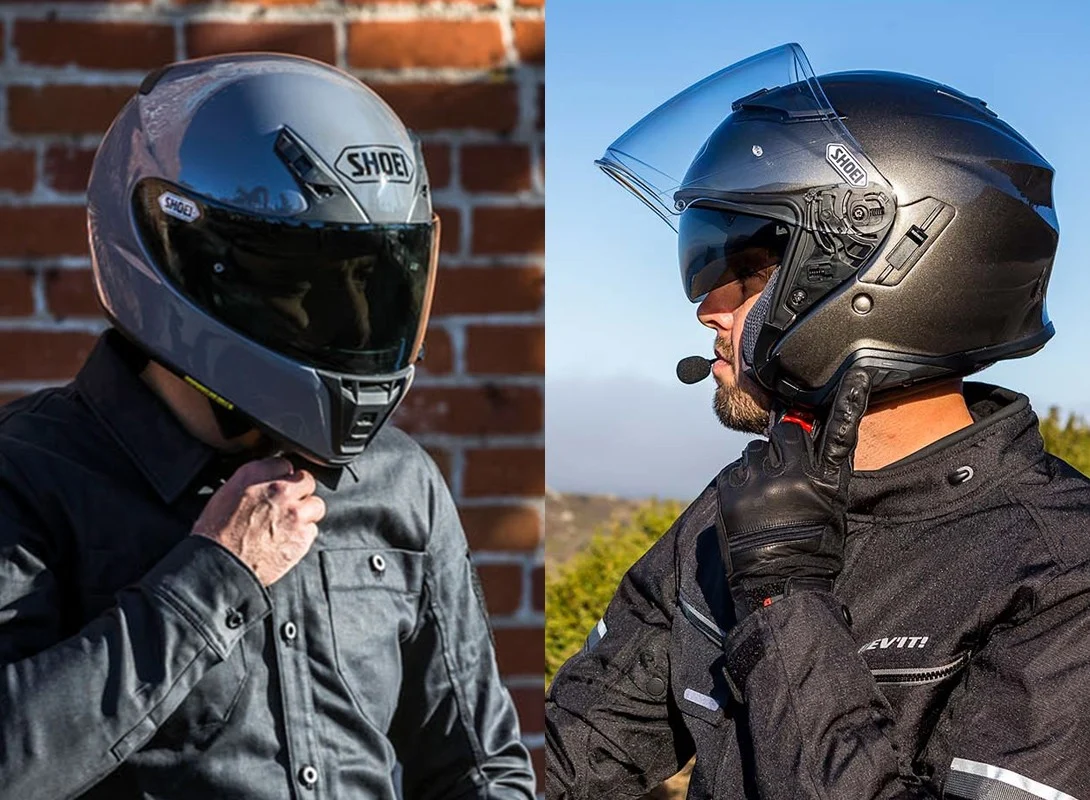
The best motorcycle helmet in 2026 is the one that fits your head, meets modern safety standards, and doesn't cook you alive at traffic lights. That's a harder combination to find than it sounds.
We compared 12 helmets across three price tiers — budget under $150, mid-range $150–$400, and premium above $400. Each one was assessed against the same criteria: safety certification (DOT, ECE 22.06, Snell M2020), published independent lab results where available, manufacturer specifications for weight and shell construction, and the weight of long-term owner reports. This is a research-led comparison rather than a hands-on test — see how we research. Here's what's actually worth your money.
What Makes a Good Helmet in 2026
Before the list: the safety standard has changed. ECE 22.06 (adopted in 2020, now mandatory for new sales in Europe) is significantly more demanding than the older ECE 22.05. It tests oblique impacts, which better simulate real crashes. If a helmet was designed before 2021, it almost certainly doesn't meet 22.06.
In the US, DOT is the legal minimum but SNELL M2020 is the gold standard for serious riders. Helmets with both ECE 22.06 and SNELL M2020 ratings represent the top of the safety pyramid.
MIPS (Multi-directional Impact Protection System) has also gone from premium feature to near-standard. It reduces rotational force on the brain in angled impacts. Worth having.
The Best Helmets by Category
Best Overall: Shoei RF-1400 (~$550)
The RF-1400 is the benchmark. Shoei has been refining this design for decades and the 2026 version is the best yet. The ventilation system actually works — you can feel the airflow change as you open and close vents. At highway speeds it's genuinely quiet, a claim most helmets can't back up.
Fit is the RF-1400's biggest advantage. Shoei offers multiple shell sizes and the cheek pads are replaceable in 5mm increments. If a helmet doesn't fit correctly, no safety rating matters — and the RF-1400 fits more heads correctly than anything else at this price.
The visor mechanism is butter-smooth and the anti-fog Pinlock 120 insert is included. Weight is 1,420g in medium, competitive for the class.
Who it's for: Riders who want the best and will keep it for 5+ years.
Best Mid-Range: AGV K6 S (~$300)
The K6 S is what you buy when you want premium performance without the premium price. It's lighter than the Shoei (1,350g) and arguably better ventilated. The aerodynamics are exceptional — zero lift at motorway speeds, minimal buffeting.
ECE 22.06 rated. The fit runs slightly round-oval, which suits a lot of Asian and European head shapes well. The visor change mechanism is tool-free and genuinely fast.
One caveat: noise levels are higher than the Shoei at speed. Not uncomfortable, but noticeable. If you do a lot of motorway miles, the RF-1400 pulls ahead.
Who it's for: Riders who want excellent performance and don't want to spend Shoei money.
Best Budget: MT Revenge 2 (~$90)
At under $100, the MT Revenge 2 has no right being this good. It meets ECE 22.06 (important at this price — many budget helmets still use older certifications) and the ventilation is adequate for city riding.
The shell is heavier than premium options at 1,580g, which you'll notice on longer rides. The visor has no anti-fog insert and will fog in cold weather without an aftermarket Pinlock. But for commuting and occasional weekend rides, it does the job.
Who it's for: New riders, commuters, anyone who wants a certified helmet while saving for something better.
Best Adventure Helmet: Shoei Hornet ADV (~$700)
For dual-sport and adventure riding, the Hornet ADV is the standard. The peak manages wind noise better than most adventure helmets, the visor system handles goggles properly, and the chin bar gives solid protection on technical terrain.
The ventilation on dirt tracks is outstanding. On the motorway it's louder than a pure road helmet — unavoidable with the adventure geometry.
Who it's for: ADV riders, dual-sport, anyone spending time off sealed roads.
Best Bluetooth-Ready: Sena Momentum Evo (~$330)
Built-in Bluetooth speaker and microphone, mesh intercom for up to 8 riders, HD speakers that are actually good enough to use at speed. Most Bluetooth helmets have terrible audio — the Sena fixes that.
ECE 22.06 rated. The Mesh 2.0 intercom has a 2km range in open terrain. Battery lasts around 8 hours of continuous use.
Who it's for: Riders who always ride with others, commuters who want calls without faff.
Helmet Fit: The Thing Nobody Talks About Enough
A $700 helmet that fits poorly is less safe than a $100 helmet that fits correctly. Here's how to check fit:
Put the helmet on and do it up. Shake your head vigorously. The helmet should move with your head, not independently of it. If the helmet wobbles, it's too big.
Try to insert two fingers between the helmet and your forehead. You should barely be able to do it. If your whole hand fits, it's too big.
Wear it for 20 minutes without riding. Pressure points will appear. Some pressure at the temples is normal for the first few weeks as pads compress — pain is not. Cheek pads should be replaceable in different thicknesses (most quality helmets offer this).
When to Replace Your Helmet
Every 5 years, or immediately after any impact — even one that looks minor. The EPS liner compresses permanently to absorb impact energy. Once compressed, it can't do it again.
If you drop your helmet on a hard floor from head height, replace it. The impact may not have cracked the outer shell but the liner inside may have been compromised.
Don't buy secondhand helmets unless you can verify the history. You have no way to know if it's been dropped.
Related Gear Guides
Looking for gear to go with your new helmet? Read our guide to the best motorcycle jackets for hot weather riding or check what motorcycle gloves are worth buying in 2026.
The Bottom Line
Best overall: Shoei RF-1400 — buy it once, keep it for years
Best value: AGV K6 S — excellent performance at a fair price
Best budget: MT Revenge 2 — ECE 22.06 for under $100
Best adventure: Shoei Hornet ADV — the ADV standard
Best integrated Bluetooth: Sena Momentum Evo — audio that's actually usable
Whatever you buy: check the fit, check the certification, and check when it was made. A helmet is the one piece of gear that doesn't get a second chance.
Standards & Sources
The certification references in this guide are drawn from the bodies that publish and administer them. If you are comparing helmets, these are the primary sources worth consulting directly rather than relying on any retailer's summary:
- SHARP — UK Department for Transport helmet safety ratings — the UK government programme that buys helmets at retail and crash-tests them independently, publishing a one-to-five-star rating. It is the closest thing to impartial comparative helmet data available to consumers, and it frequently disagrees with price.
- UNECE — publisher of UN Regulation No. 22, the standard behind the ECE 22.05 and ECE 22.06 approval marks. ECE 22.06 introduced rotational-acceleration testing and a wider range of impact points and speeds than 22.05.
- Snell Memorial Foundation — an independent, voluntary certification body. Snell M2020 is stricter than ECE in some impact criteria and is not a legal requirement anywhere; manufacturers submit helmets by choice.
- NHTSA — administers FMVSS 218, the US "DOT" standard. Note that DOT certification is self-declared by the manufacturer, with NHTSA conducting audit testing after the fact.
Specifications, weights and shell-size counts are taken from current manufacturer documentation for each model. Where a figure varies by shell size or market, we have noted it in the relevant section.
On our ratings: BikeLabs does not conduct impact testing. Our assessments weigh published certification results, manufacturer specifications and documented independent testing against price and intended use. They are editorial judgements, not measurements — see how we research.