Best Motorcycle Gloves for Every Riding Style
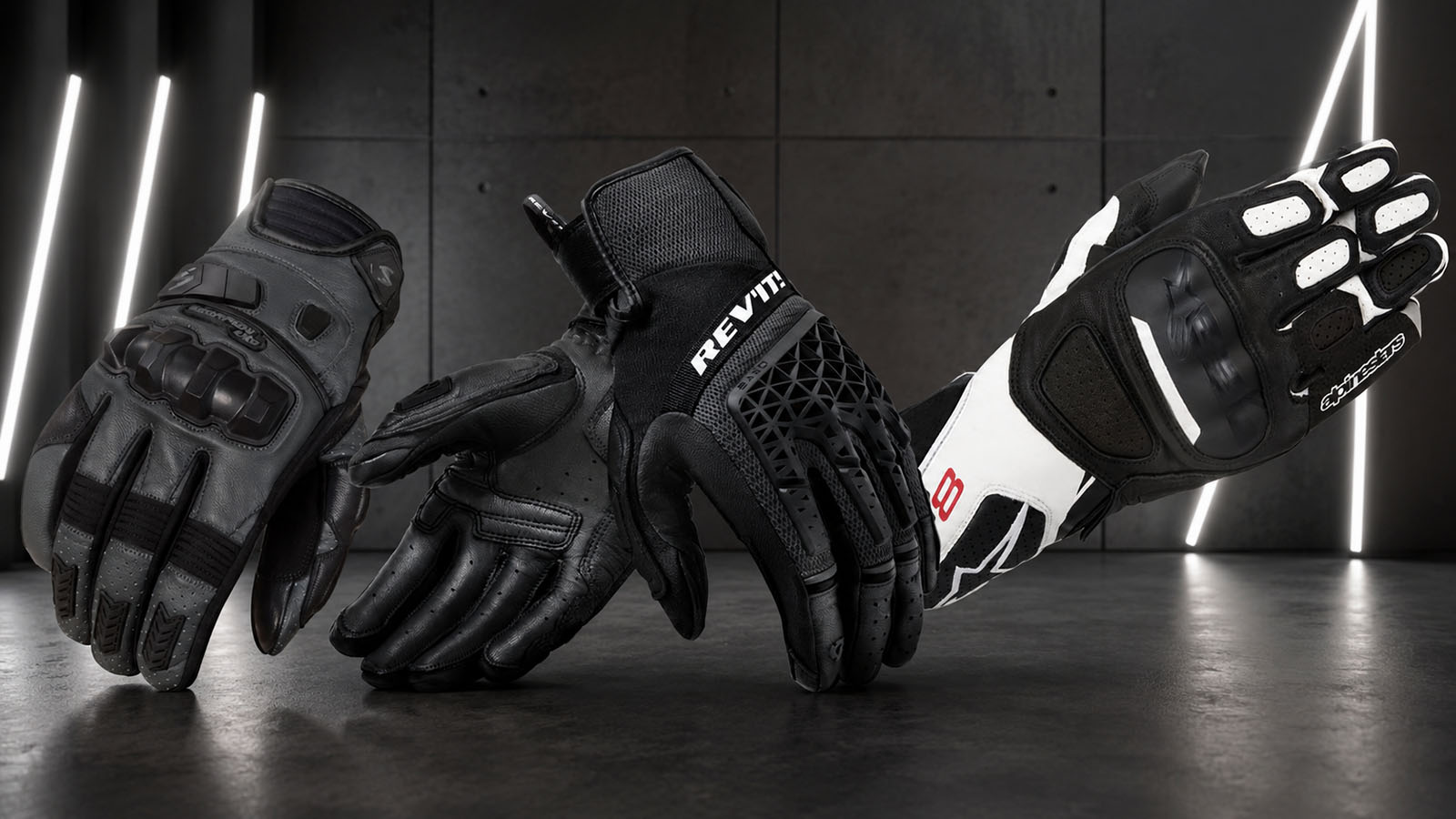
Motorcycle gloves are the piece of gear riders are most likely to skip. Don't. Your hands are the first thing that hits the ground in a fall — instinct puts them out before your brain can override it. Without gloves, road rash on your palms is almost guaranteed in any serious slide.
The best motorcycle gloves in 2026 balance protection, dexterity, and comfort. Here's what's worth buying across every riding style.
What Makes a Good Motorcycle Glove
CE Level 2 knuckle protection. The knuckle takes direct impact in most falls. Level 2 absorbs significantly more energy than Level 1. Non-negotiable for any serious riding.
Palm slider. A hard plastic or carbon slider on the palm absorbs impact force and allows the glove to slide rather than grab the tarmac. Without it, the abrasion force transfers directly to your bones.
Cuff closure. A glove that fits loosely can come off in a crash. The cuff should seal around your wrist — either with Velcro, a strap, or by tucking inside your jacket sleeve.
Dexterity. A glove you can't feel through is dangerous. You need to feel brake lever pressure, clutch engagement, and throttle position. Thick armour with zero feel is counterproductive.
Best Gloves by Category
Best Summer/Commuting: Dainese Air Master (~$90)
The Air Master is our go-to recommendation for hot-weather riding. Mesh back, carbon knuckle protector (CE Level 2), hard palm slider, and enough dexterity to feel everything you need to feel.
The fit is snug without being constricting. In traffic, the mesh keeps hands from overheating. At speed, the aerodynamics are clean — no flapping panels, no wind noise from the gloves themselves.
One thing: in rain they're useless. These are dry-weather gloves. Accept that or get a waterproof pair for when the sky opens.
Who it's for: Commuters, city riders, warm-climate touring.
Best All-Weather: Held Phantom Air (~$160)
Finding a glove that works in both 35°C heat and 10°C cold is difficult. The Phantom Air is the closest thing to a true all-season glove we've found. Gore-Tex waterproofing, adequate ventilation for mild heat, and enough insulation for cool mornings.
CE Level 2 throughout. The fit is generous — easier to put on and off than a close-cut sport glove. Touchscreen-compatible fingertips work reliably.
The compromise: it's not as cool as a pure mesh glove in genuine heat, and not as warm as a winter glove in genuine cold. But for riders in moderate climates who want one pair, this works.
Who it's for: Touring riders, commuters in variable climates, anyone who hates carrying two pairs.
Best Winter: Alpinestars Corozal Adventure Drystar (~$130)
Winter gloves need to be waterproof, warm, and still allow enough feel for brake modulation. The Corozal Adventure Drystar gets that balance right. Drystar waterproofing, Thinsulate insulation, and a cuff that seals properly against jacket sleeves.
CE Level 1 at the knuckle (Level 2 is rare in winter gloves — the extra bulk conflicts with insulation). Touchscreen fingertips. Reflective panels on the back.
In temperatures below 5°C with rain, these keep hands dry and functional. Below -5°C, you need heated grips or heated gloves.
Who it's for: Winter commuters, cold-climate touring.
Best Sport/Track: Alpinestars SP-8 v3 (~$110)
For sport riding and occasional track days, the SP-8 v3 offers genuine track-level protection at a road-use price. Leather palm with suede reinforcement, CE Level 2 knuckle protector, hard internal thumb reinforcement, and a palm slider.
The fit is close and the dexterity is exceptional — you can feel every input clearly. Not comfortable for all-day touring (sport gloves rarely are) but outstanding for spirited road riding.
Who it's for: Sport bikes, canyon riders, occasional track use.
Best Budget: Icon Pursuit Classic (~$50)
At $50, the Pursuit Classic doesn't match the protection level of the above but it's dramatically better than no gloves. Leather palm, basic knuckle protection (CE Level 1), palm padding.
If you're a new rider building a kit on a budget, start here and upgrade when you can. Riding gloveless is never the right answer.
Who it's for: New riders, budget builds, backup pair.
Sizing and Fit
Measure around your palm at the widest point, excluding your thumb. This is your hand circumference. Cross-reference the brand's size chart — sizing varies significantly between manufacturers.
New gloves should feel snug. The leather and foam will break in over the first few rides and conform to your hand shape. If they feel tight, they'll stretch. If they feel loose on day one, they'll be sloppy by month three.
How Long Do Motorcycle Gloves Last?
Quality gloves with regular use last 2–3 years before the stitching weakens and the protection degrades. Check the stitching around the fingers and cuff regularly. Replace immediately after any crash, even a minor one — the protective materials compress on impact and don't recover.
The Full Kit
Your hands need gloves. Your head needs a helmet — read our best motorcycle helmets 2026 guide. Your body needs a jacket — read our best hot-weather motorcycle jackets breakdown.
The Bottom Line
Best commuting/summer: Dainese Air Master — CE Level 2, breathable, honest protection
Best all-weather: Held Phantom Air — the one pair that covers most conditions
Best winter: Alpinestars Corozal Drystar — warm, waterproof, functional
Best sport: Alpinestars SP-8 v3 — track-level feel at a road price
Best budget: Icon Pursuit Classic — better than nothing, significantly better
Buy gloves. Wear them every ride. Your future hands will thank your current self.
Standards & Sources
Motorcycle gloves sold in Europe are certified as personal protective equipment, which means the marking on the cuff carries specific, testable meaning:
- CEN — European Committee for Standardization — publisher of EN 13594, the standard for motorcycle gloves. It defines the Level 1 and Level 2 classifications referenced above, covering impact abrasion, cut resistance, tear strength and seam strength. Level 2 requires higher performance across those tests than Level 1; it is not a marketing tier.
- Gloves meeting EN 13594 carry a CE mark with the standard number and level printed on the product or its label. A glove described as "CE approved" without a visible standard reference and level is not telling you anything verifiable.
Materials, armour specifications and construction details are taken from current manufacturer documentation for each model. Prices are recommended retail at the time of writing.
On our ratings: BikeLabs does not conduct abrasion or impact testing. Our assessments weigh published certification levels, manufacturer specifications and documented independent testing against price and intended use — see how we research.