Sena 60S Mesh Headset Review: Unlimited Range Intercom Is a Real Thing Now
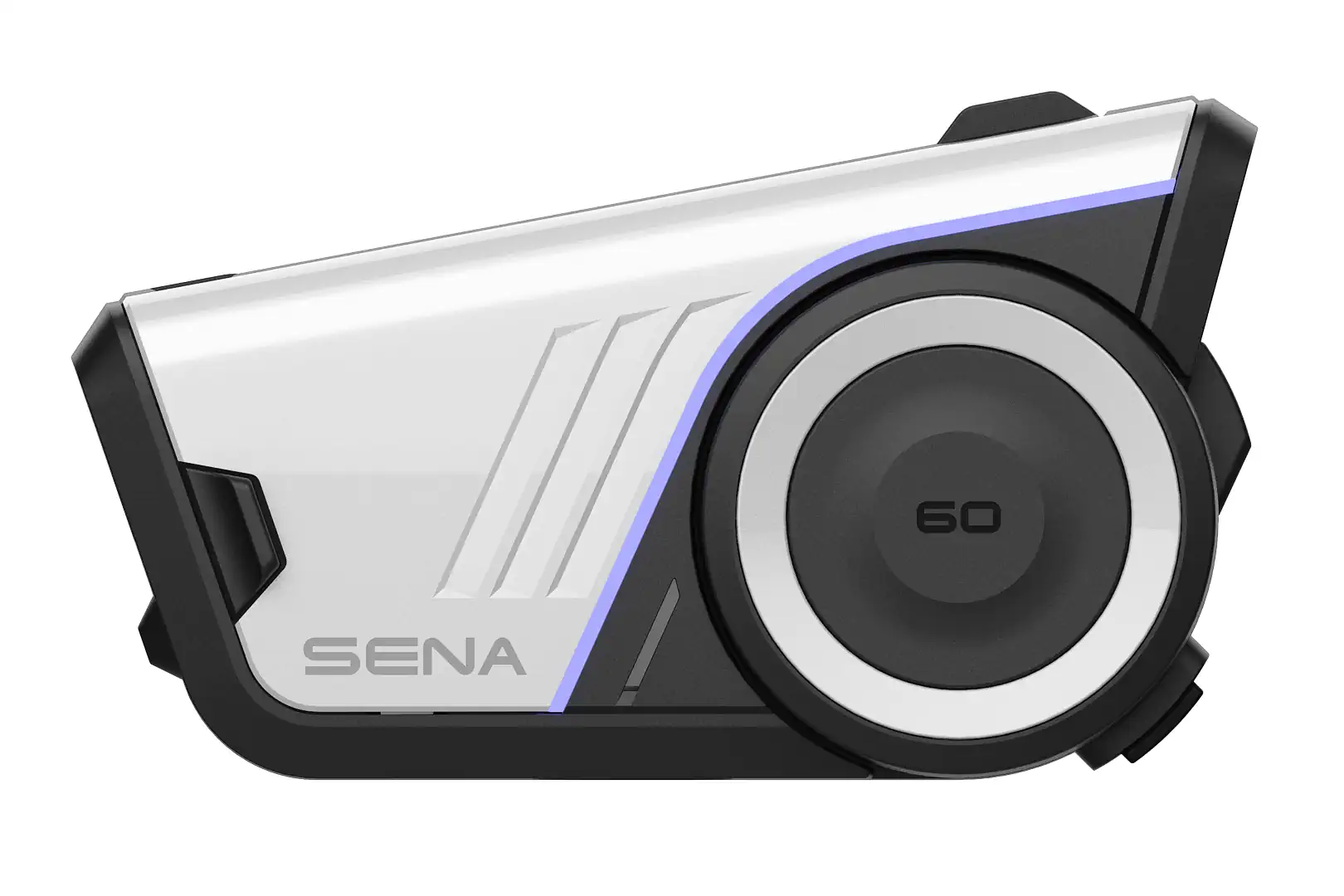
The fundamental limitation of every motorcycle intercom system has always been range. Bluetooth struggles beyond 1.2 km. Mesh radio extends this to 2 km in ideal conditions. Both figures become academic when a riding group spreads across a mountain pass or one rider turns the wrong way at a junction.
Sena's WAVE technology attempts to eliminate this limitation entirely. By routing intercom audio through a cellular data connection when direct radio communication fails, the 60S promises intercom communication at any range, provided both riders have cellular signal.
Judged against Sena's specifications and the accumulated weight of owner and press reports, the technology delivers — with important nuances.
WAVE Technology: How It Works
The 60S contains both a standard Mesh 2.0 radio for local short-range communication and a cellular modem (requiring an active SIM or eSIM activation). The Sena Momentum app on each rider's smartphone bridges the two systems.
Normal operation (riders within mesh range): Communication flows directly via Mesh 2.0 radio — no cellular latency, no data cost.
When riders exceed mesh range: The system detects the loss of direct radio connection and automatically routes audio through the cellular network via the app. Both riders' phones connect to Sena's servers; audio is transmitted via internet. Latency is perceptible but manageable — approximately 300–500ms, compared to the near-zero latency of direct mesh communication.
The practical reality: Touring riders report WAVE holding a connection between a separated rider and a group leader across distances in the tens of kilometres in urban traffic — impossible on any conventional mesh system. The cellular latency is described as noticeable but voice communication as remaining clear.
Limitations: Both riders need cellular signal. In mountainous areas with poor coverage — exactly where groups are most likely to separate — the cellular fallback loses its advantage. Also: WAVE requires an ongoing Sena subscription after the initial trial period.
Mesh 2.0: Multi-Channel and Open Mesh
The 60S supports Sena's Mesh 2.0 protocol in two modes:
Group Mesh: A private channel accessible only to paired units. Groups can create up to three separate private channels — useful for sub-groups within a larger ride, or for separating guide and support rider communication from the main group.
Open Mesh: A public channel that any 60S (and compatible Sena unit) within range can join without pairing. In practice, this creates ad-hoc communication with other Sena users on public roads — an interesting feature that occasionally produces unexpected conversations with strangers.
Reported mesh range: Stable communication to around 1.8 km in open countryside, compressing to roughly 500m in built-up urban environments before degradation. These figures track the Cardo Edge closely and reflect the physical limits of the radio frequencies used, not a product-specific weakness.
Harman Kardon Audio
The 60S's integration with Harman Kardon audio is the most differentiating feature for riders who prioritise music quality.
The 45mm Harman Kardon drivers are larger than the 40mm JBL units in the Cardo Edge, and the tuning reflects this. Bass response is notably deeper — music sounds fuller at highway speeds where smaller drivers lose their low-end in the ambient noise floor.
Comparison to Cardo Edge JBL: The Sena HK audio has a warmer, more musical character. The Cardo JBL has a slightly cleaner, more analytical presentation. Neither is objectively superior — it depends on musical preference. For spoken word content (podcasts, navigation instructions), both are equally intelligible.
Microphone quality: The 60S mic includes an upgraded noise cancellation filter that owners consistently rate above the previous Sena 50S, with cleaner voice transmission in cross-wind riding. Reports from naked-bike riders describe voice remaining intelligible without shouting at sustained motorway speeds.
Battery Longevity and Charging
Claimed battery life: 13 hours on Mesh only; 9 hours with WAVE cellular active. Owners typically report closer to 11 hours mesh-only and 8 hours with WAVE active — broadly consistent with the claim once ambient temperature is factored in, since cold weather reduces lithium cell capacity.
Charging: USB-C, fast-charge capable. From 20% to 100% in approximately 1.5 hours. This is the best charging time in the premium intercom segment and allows a meaningful top-up during a lunch stop.
The unit charges through a rubber-sealed port rather than a magnetic connector. Owner reports do not flag this as a waterproofing weakness, but it is less convenient than the Cardo Edge's sealed magnetic charging.
Pros and Cons
Pros:
- WAVE cellular fallback genuinely solves the range problem for groups with cellular coverage
- Harman Kardon 45mm drivers produce the best audio quality in the intercom category
- Fast USB-C charging — 1.5 hours full charge
- Open Mesh public channel creates ad-hoc rider communication
- IP67 rated — reliable in heavy rain
- Three private group channels simultaneously — useful for complex group logistics
Cons:
- WAVE requires subscription after trial (additional ongoing cost)
- WAVE latency (300–500ms) is perceptible and can create communication awkwardness
- WAVE is useless without cellular coverage — exactly where group separation is most likely
- Cellular modem adds weight compared to mesh-only competitors
- The Sena app is functional but less polished than the Cardo app
Final Verdict
Scores below are editorial assessments based on certification data, published specifications and owner consensus — not our own physical measurements. See how we research.
| Category | Score |
|---|---|
| WAVE Unlimited Range | 8.5/10 |
| Mesh Network Performance | 9/10 |
| Audio Quality (HK) | 9.5/10 |
| Battery and Charging | 8.5/10 |
| Waterproof Reliability | 9/10 |
| Value for Money | 7.5/10 |
| Overall | 8.7/10 |
The Sena 60S is the right choice for riders who want the best audio quality available and can accept the subscription cost for WAVE. The cellular range extension is a genuine capability that solves a real problem — but it only works when you need it least (when cellular coverage exists) and fails when you need it most (remote terrain). As a straight mesh intercom with exceptional audio, it competes directly with the Cardo Edge; the choice between them largely comes down to whether JBL or Harman Kardon better suits your ears.