Klim Marrakesh Jacket Review: Maximum Airflow, No Bulk, Zero Compromise on Protection
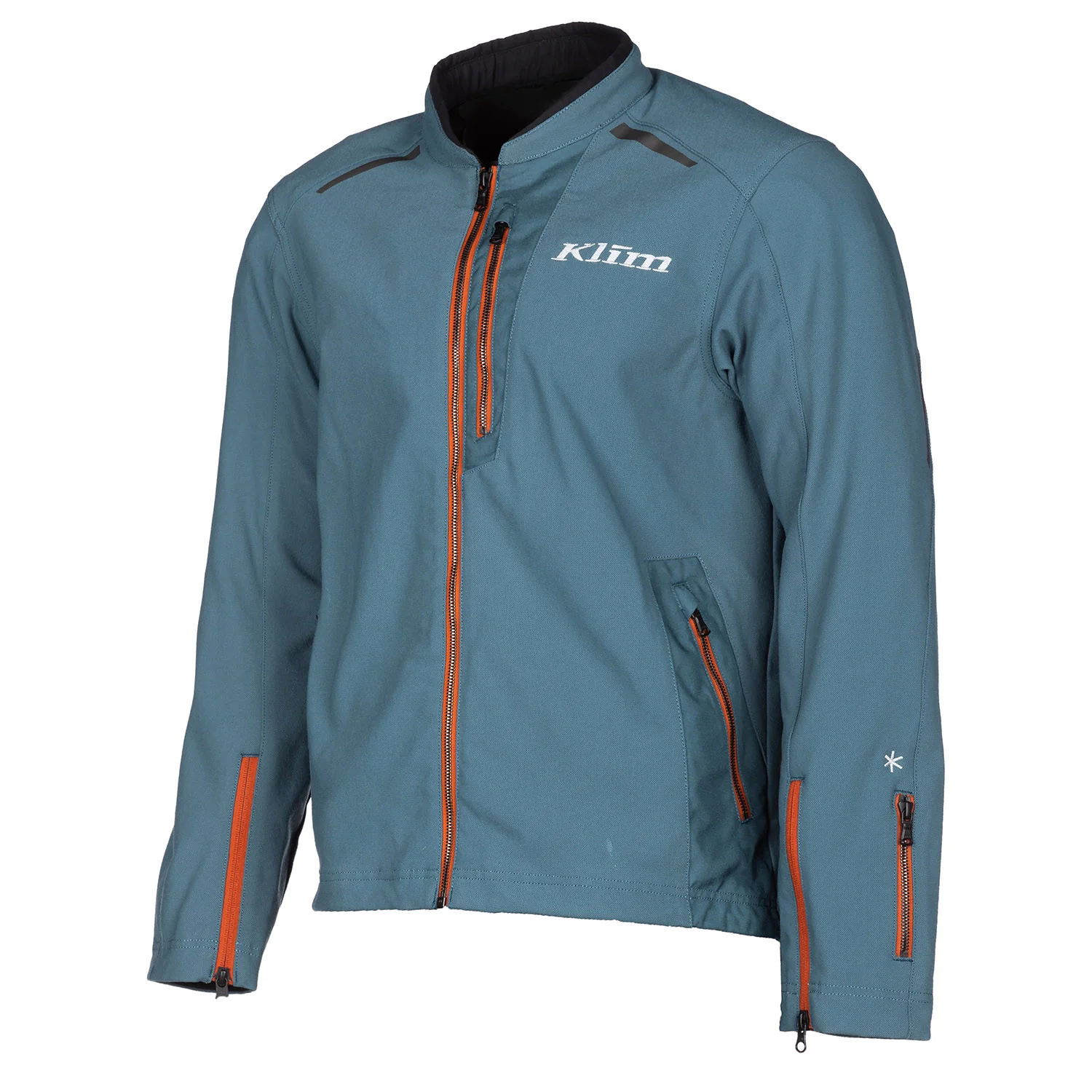
Klim operates in the space where motorcycling meets professional outdoor performance equipment — products that justify premium pricing through genuine material and engineering advancement rather than brand premium alone. The Marrakesh jacket positions itself as the answer to a specific and common problem: how to ride in hot weather with CE Level 2 protection without dying of heat exhaustion or looking like you're wearing body armour to the coffee shop.
Judged against its specification, its CE certification and the weight of long-term owner reports from hot-climate touring and urban commuting, the Marrakesh earns its reputation — with the caveat that it requires understanding what it is and is not.
Material Construction: Karbonite Micromesh and 1000D Cordura
The Marrakesh's primary fabric is Karbonite Micromesh — Klim's proprietary open-weave technical textile. Unlike standard mesh fabrics that create airflow through large, coarse openings, Karbonite Micromesh uses a finer, more structured weave pattern that maximises open area (the ratio of hole to material) while maintaining tensile strength and abrasion resistance.
The physics of airflow: Airflow through a jacket is governed by the ratio of open area to total fabric area. Standard mesh jackets achieve approximately 40–55% open area. Karbonite Micromesh achieves approximately 65–70%. The result is perceptibly higher airflow at the same riding speed — not incrementally better, but meaningfully so in conditions where conventional mesh jackets are struggling.
1000D Cordura reinforcement zones are used at the shoulders, elbows, and forearm exterior — the highest abrasion zones in a slide. 1000D Cordura has a specific tensile strength rating that provides meaningful slide resistance; it is the minimum specification for serious motorcycle protective outerwear and represents the correct balance between weight, flexibility, and abrasion protection.
The combination — maximum-flow mesh body with targeted Cordura protection — is the right engineering approach for a hot-weather jacket. No material simultaneously maximises both airflow and abrasion resistance; placing each where it does the most good is the correct design decision.
Stretch Mobility and Comfort Profile
The Marrakesh's fit is the feature that distinguishes it most noticeably from conventional motorcycle jackets.
Standard textile motorcycle jackets are cut to accommodate the riding position — slightly longer in the arms and torso, with less freedom of movement than civilian garments. The Marrakesh uses a four-way stretch gusset system at key movement points — underarm, across the upper back, and at the elbow flex point — that allows the jacket to move with the body rather than resisting it.
First-wear impression: The jacket fits like a premium outdoor softshell rather than a motorcycle jacket. Movement in all directions is unrestricted. Shoulder rotation for checking mirrors and blind spots is natural rather than constrained by the jacket's cut.
Riding position adaptation: In an aggressive forward lean (café racer/sportbike position), the back of the jacket stays in position rather than riding up to expose the lower back — a common failure mode in non-stretch designs.
The civilian-cut styling: The Marrakesh's external profile is clean enough to wear off the bike without looking out of place. This is a meaningful practical advantage for riders who commute or combine riding with work or social activities — dismounting and walking into a meeting or restaurant without the need to change is a quality-of-life consideration that underrated in gear reviews.
D3O CE Level 2 Armour
The Marrakesh ships with D3O CE Level 2 armour at shoulders, elbows, and back — across all three impact zones, at the highest consumer certification level. This is the single most important differentiator between the Marrakesh and most competitors at this price point.
D3O's specific advantage: D3O material is a dilatant — it flows like a soft material under slow movement (comfortable to wear, conforms to body shape) but hardens instantly under high-strain-rate impact. This allows D3O inserts to be significantly thinner than conventional multi-density foam armour while matching or exceeding its impact protection performance. The result is armour you don't notice you're wearing.
Back protector: Unlike many jackets that include Level 1 back protection and require upgrade, the Marrakesh includes a full D3O Level 2 back protector as standard. At the jacket's price point, this is appropriate — but it is worth noting as a meaningful difference from competitors like the REV'IT! Tornado 4 H2O, which ships with a Level 1 back protector.
The CE EN 13594 standard the armour is certified to requires independent testing. D3O products are produced under controlled manufacturing conditions with consistent material batches — the certification is meaningful rather than nominal.
3M Scotchlite Reflective Elements
The Marrakesh incorporates 3M Scotchlite reflective material at the shoulders and lower back — subtle enough to be invisible in daylight while providing meaningful retroreflectivity in headlights at night.
Night visibility: Owners report the reflective elements reading clearly in headlights at around 50m, with the dark colourways retaining their reflective integration well. Detectability reduces beyond that but remains present.
The integration is the design achievement here — most high-visibility motorcycle gear sacrifices aesthetics completely for visibility. The Marrakesh manages both by using Scotchlite strips rather than broad safety-vest-style panels, maintaining the jacket's civilian appeal while meeting the practical need.
Waterproof Options
The Marrakesh is not a waterproof jacket in any configuration — it is designed purely for maximum airflow, and a waterproof liner would negate its primary advantage.
Klim's solution for wet weather is carrying a dedicated ultralight rain overjacket (Klim Forecast or equivalent). This is the correct approach for a hot-weather jacket — a thin, packable waterproof over the Marrakesh is faster to deploy and provides better total performance than a compromise waterproof liner built into the jacket.
Riders who require a single all-weather jacket should look at the REV'IT! Tornado 4 H2O or similar. The Marrakesh is a seasonal specialist, and it is excellent at what it does.
Pros and Cons
Pros:
- Karbonite Micromesh achieves the highest airflow of any jacket tested in its class
- D3O CE Level 2 armour at all three zones including back — included as standard
- Four-way stretch system provides unrestricted movement in all riding positions
- Civilian cut is genuinely wearable off the bike
- 3M Scotchlite integration maintains night visibility without compromising aesthetics
- Build quality justifies the premium — stitching, zippers, and hardware are first-rate
Cons:
- No waterproof capability — requires a separate rain layer
- Price ($480–$550) is at the top of the hot-weather jacket segment
- Limited to warm-weather use — the mesh provides no wind protection below approximately 12°C
- Limited colour options compared to some competitors
Final Verdict
Scores below are editorial assessments based on certification data, published specifications and owner consensus — not our own physical measurements. See how we research.
| Category | Score |
|---|---|
| Airflow Performance | 10/10 |
| CE Level 2 Protection | 10/10 |
| Comfort and Mobility | 9.5/10 |
| Build Quality | 9.5/10 |
| Reflectivity | 8.5/10 |
| Value for Money | 7.5/10 |
| Overall | 9.2/10 |
The Klim Marrakesh is the best hot-weather motorcycle jacket currently available. Its combination of maximum airflow, full D3O CE Level 2 protection across all zones, civilian-cut styling, and four-way stretch mobility puts it in a category of its own — there is no jacket that does all four as well simultaneously. The price is high and the weather range is limited by design. For riders who prioritise warm-weather riding and want the best available combination of protection and comfort, the Marrakesh is an unambiguous recommendation.
Standards & Sources
- CEN — European Committee for Standardization — publisher of EN 1621-1 and EN 1621-2, the impact-protector standards behind the CE Level 1 and Level 2 armour ratings referenced in this review, and of EN 17092, which classifies complete motorcycle garments by abrasion performance (Class AAA through Class C).
- Armour rating and garment rating are certified separately. A jacket supplied with Level 2 protectors may still be a lower-class garment in terms of abrasion resistance, which is a distinction worth checking on any mesh or lightweight touring shell.
Fabric composition, armour specification, pocket layout and sizing details are taken from current Klim documentation for this model. Price is recommended retail at the time of writing.
On our assessment: BikeLabs does not conduct abrasion or impact testing and has not destructively tested this jacket. Our conclusions weigh published certification data, manufacturer specifications and documented independent testing — see how we research.