Shoei RF-1400 Full-Face Helmet Review: Still the Benchmark?
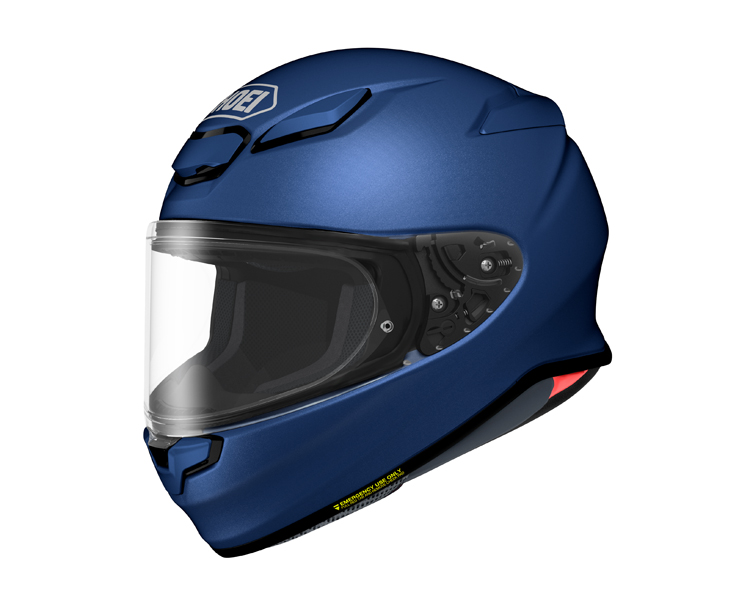
Shoei has occupied the upper tier of motorcycle helmet manufacturing for decades. The RF-1400 — the direct successor to the RF-SR — arrived carrying that reputation and the weight of expectations from riders accustomed to treating Shoei helmets as the default answer to the question: what is the best full-face street helmet available?
The short answer is that the RF-1400 remains one of the best. The longer answer requires understanding exactly where it excels and where the competition has closed the gap.
Aerodynamic Design Profile
The RF-1400's shell geometry is the result of Shoei's proprietary wind-tunnel testing programme. The multi-piece integrated matrix shell (which Shoei calls AIM+ on higher-end models) uses fibreglass, organic fibres, and resin to produce a shell with a low polar moment of inertia — meaning the helmet resists rotation at high speed rather than generating lift or buffeting.
Four shell sizes accommodate different head sizes with geometry optimised for each — rather than stretching a single shell shape with additional liner, each shell is designed to produce the correct external aerodynamic profile for its interior volume. This is relevant to both aerodynamic performance and impact management.
At sustained motorway speeds, owner and press reports consistently describe minimal buffeting. Riders with an upright riding position report more wind noise than those tucked behind a fairing — that is a function of airflow meeting the helmet without a windscreen to redirect it, not a flaw in the shell design.
The chin bar shape has been refined from the RF-SR to address a long-standing criticism: the older model created a slight downforce effect at speed. The RF-1400's revised chin bar geometry reduces this, though the effect is still perceptible at sustained high speeds compared to race-focused alternatives like the Shoei NXR2.
Ventilation Performance
The RF-1400's ventilation system uses five intake points and two exhaust channels — an improvement on the RF-SR's layout.
Chin vent: The centre chin vent has been redesigned with a larger opening and a two-position slider. In full-open position, airflow to the face is meaningful and perceptible. In urban traffic where speed is insufficient to drive flow, the chin vent contributes little — which is true of every helmet at low speed.
Crown vents: Two sliding crown vents feed air through channels above the EPS liner to the top of the head. These are the ventilation system's strongest performers — at motorway speeds with both open, the cooling effect at the crown is genuinely effective.
Exhaust: Two rear exhaust ports create a low-pressure zone that draws warm air from the interior. The extraction is passive and speed-dependent — it works best when moving and least in traffic.
Overall ventilation verdict: The RF-1400 is well-ventilated for a full-face street helmet, superior to most mid-range alternatives, but behind dedicated warm-weather helmets like the Shoei GT-Air 3 in terms of total airflow volume. Riders in consistently hot climates will find it warm in stop-start riding.
Noise Isolation
This is where the RF-1400 particularly distinguishes itself. Shoei's internal geometry — the combination of neck roll profile, cheek pad density, and the interaction between the face shield seal and the chin bar aperture — produces a notably quiet interior compared to most competitors at this price point.
Around 100 km/h: Owners consistently describe very low wind noise with the visor sealed, with the dominant sound being mechanical — road noise conducted through the rider's body rather than airborne wind entering the helmet.
At 130 km/h and above: Reports agree that wind noise becomes more present but remains manageable. Riders who do not use earplugs will notice it; riders who do (and all riders at sustained motorway speeds should) report barely registering it.
The premium 3D Max-Dry interior liner uses a moisture-wicking fabric that outperforms standard foam-backed materials in sweat management and maintains comfort on rides over three hours.
Safety Standards
The RF-1400 holds DOT FMVSS No. 218 and Snell M2020 certification. Snell certification is the more stringent standard — it tests at higher impact energies than DOT and requires third-party laboratory certification rather than self-certification.
ECE 22.06 certification (the current European standard) is also available on European-market versions, which uses a different testing methodology focusing on both single-impact and angled impact performance.
Four shell sizes. Multiple EPS density zones provide softer outer impact absorption with increasingly stiff inner layers to manage the deceleration curve. Emergency cheek pad removal via the orange pull tabs allows medical personnel to remove the helmet with reduced neck movement.
Pros and Cons
Pros:
- Exceptional build quality — the fit and finish justify the premium price
- Genuinely quiet interior at speed compared to most competitors
- Snell M2020 certification provides independent safety validation
- Premium 3D Max-Dry liner comfortable on extended rides
- Emergency cheek pad extraction system
- Multiple shell sizes rather than one-size-padded-to-fit
Cons:
- Ventilation adequate but not exceptional — warm in sustained urban heat
- Weight (1,490g in Medium) perceptible on long rides compared to lighter alternatives
- Price point puts it out of range for many riders without offering dramatically superior performance to well-specified mid-range options
- Pin lock visor system (not included at base price on some variants) is an additional purchase
Final Verdict
Scores below are editorial assessments based on certification data, published specifications and owner consensus — not our own physical measurements. See how we research.
| Category | Score |
|---|---|
| Aerodynamics | 9/10 |
| Ventilation | 7.5/10 |
| Noise Isolation | 9/10 |
| Interior Comfort | 9/10 |
| Safety Credentials | 9.5/10 |
| Value for Money | 7.5/10 |
| Overall | 8.6/10 |
The Shoei RF-1400 remains one of the best full-face street helmets available for riders who prioritise comfort on long rides, noise management, and build quality. It is not the most ventilated helmet in its price range, and the value equation requires you to genuinely use the premium it delivers. For riders who spend hours at a time on the road and notice the quality difference, the RF-1400 continues to justify its position.
Standards & Sources
- Snell Memorial Foundation — publisher of the Snell M2020 standard referenced in this review. Snell certification is voluntary and manufacturer-funded; the foundation tests submitted helmets against criteria that exceed ECE requirements in several impact scenarios.
- UNECE — publisher of UN Regulation No. 22, behind the ECE 22.06 approval. ECE 22.06 introduced rotational-acceleration testing alongside a broader set of impact points and speeds.
- NHTSA — administers FMVSS 218, the US "DOT" standard.
- SHARP — UK Department for Transport — independent crash-test ratings for helmets sold in the UK, useful for comparing this helmet against alternatives at similar and lower prices.
Weights, shell-size counts, liner specifications and ventilation details are taken from current Shoei documentation for this model. Figures vary by shell size and market.
On our ratings: BikeLabs does not conduct impact testing and has not destructively tested this helmet. Our assessment weighs published certification results, manufacturer specifications and documented independent testing — see how we research.