How to Maintain Your Motorcycle: Complete Beginner's Guide
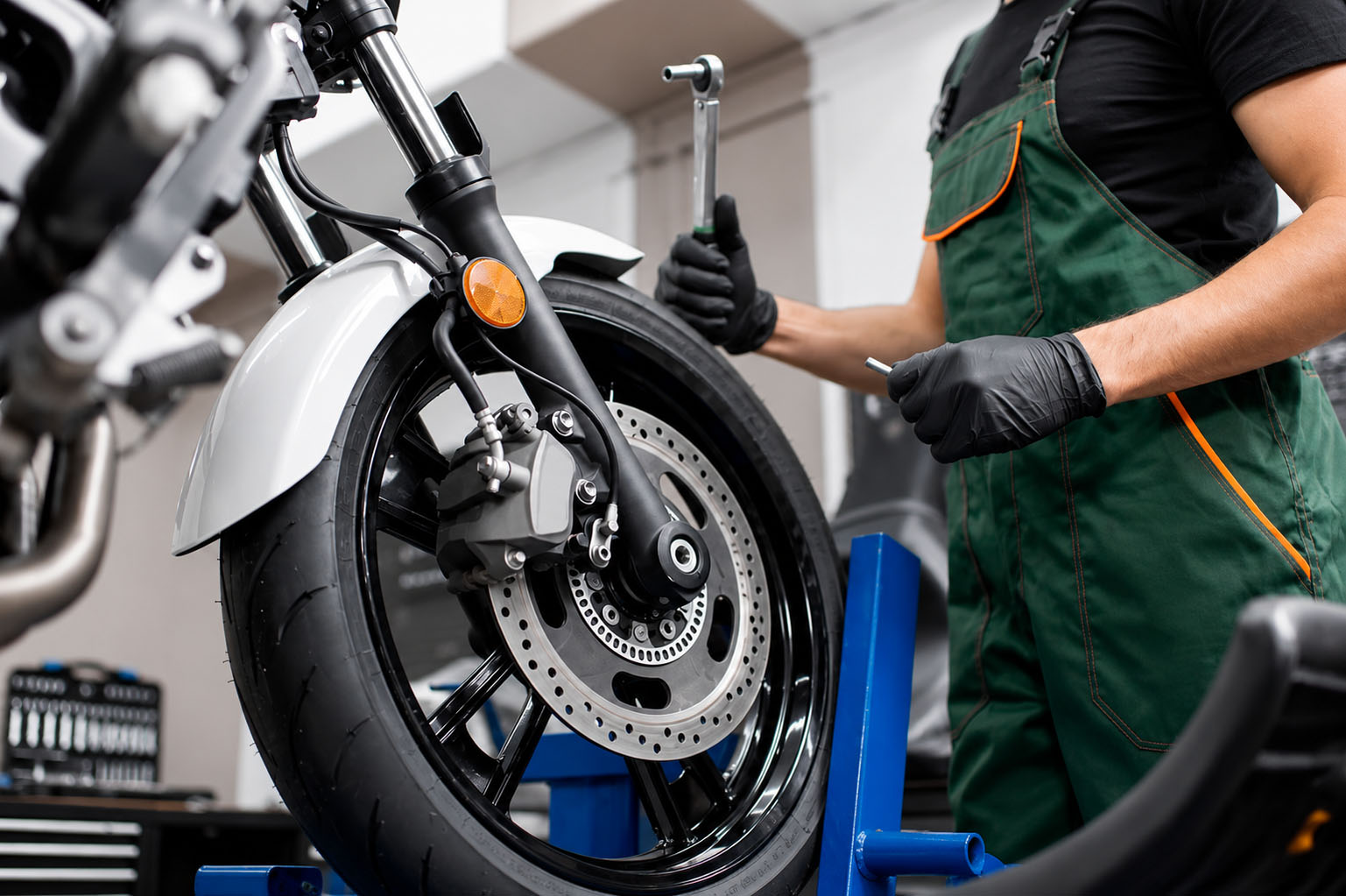
Motorcycle maintenance isn't complicated, but most riders either do too little or spend money at a shop on things they could easily do themselves. This guide tells you what to check, when to do it, and what the consequences are if you don't.
The goal is to keep you riding safely without spending more than you need to.
The Pre-Ride Check (5 Minutes, Every Time)
Before you start the engine, walk around the bike. It sounds paranoid. It saves lives.
Tyres: Press your thumb into the tyre. It should feel rock hard. If there's any give, check the pressure immediately. Look at the tread centre and edges for flat spots, cracks, or embedded objects. A nail found before you ride is an inconvenience. Found at 100km/h on a motorway it's a different matter.
Chain (if applicable): The chain should have 25–35mm of slack at the tightest point (check your manual for your specific bike). A chain that's too tight stresses the final drive. A chain that's too loose can jump the sprocket. Look for rust, stiff links, or kinks.
Brakes: Squeeze the front lever firmly. It should feel solid and progressive, not spongy. Press the rear brake. Same check. Look at the brake fluid reservoir — it should be above the minimum line. Look at the discs for deep grooves or cracks.
Lights: Flick the indicators, headlight, and brake light. A rear light failure is invisible to you and dangerous to everyone behind you.
Oil level: Most bikes have a sight glass on the engine cases. The oil level should be between min and max with the bike on a level surface. Takes 10 seconds to check.
That's it. Five minutes that identify 90% of problems before they become incidents.
Weekly Checks
Chain lubrication: If you ride daily, lube the chain weekly. Apply chain lube to the inside of the chain while it's warm (just ridden), rotating the wheel slowly to coat every link. Wipe off excess. Don't over-lube — excess attracts grit.
Tyre pressure: Buy a decent digital gauge and check pressures weekly, always when tyres are cold (not immediately after riding). Correct pressures are in your manual and usually on a sticker on the swingarm. Running low pressure wears tyres unevenly, increases fuel consumption, and dramatically worsens handling.
Visual inspection: Look under the bike for oil spots. Look at the brake lines and clutch line for damage. Look at the exhaust mounts for cracks.
Monthly or Every 1,000km
Chain tension and wear: Check the tension as per pre-ride check, but also measure chain wear with a chain wear indicator tool (cheap, worth having). A worn chain accelerates sprocket wear and will eventually skip under load. Replace chain and sprockets together — never fit a new chain on worn sprockets.
Air filter: Remove the airbox cover and look at the filter. A paper filter should be off-white to light tan. Brown-black means restricted airflow and reduced performance. Tap it gently to dislodge loose dust. Replace when discoloured. For oiled foam filters, clean and re-oil.
Battery terminals: Check they're tight and not corroding. White powder on the terminals means corrosion — clean with a wire brush and apply terminal grease.
Service Intervals
Your owner's manual has a service schedule. Follow it. The key items:
Engine oil and filter: Typically every 4,000–6,000km on most bikes. Oil degrades with heat cycles and contaminates with combustion byproducts. Old oil increases wear. This is the single most important maintenance item.
Doing it yourself: drain plug and filter location in your manual. Requires oil, a filter, a drain pan, and two spanners. Saves significant labour cost.
Coolant (liquid-cooled bikes): Replace every 2 years regardless of mileage. Coolant degrades and becomes acidic over time, attacking internal components.
Brake fluid: Replace every 2 years. Brake fluid is hygroscopic — it absorbs water from the air. Wet brake fluid has a significantly lower boiling point than fresh fluid. On a long mountain descent with heavy braking, degraded fluid can boil, causing brake fade at the worst possible moment.
Fork oil: Every 2 years or 20,000km. Degraded fork oil makes the suspension feel vague and wallowy.
Spark plugs: Check your manual but typically every 12,000–24,000km on modern iridium plugs. A misfiring plug causes rough running, poor fuel economy, and can damage the catalytic converter.
Valve clearances: The most misunderstood maintenance item. Valves need to be checked and adjusted at intervals specified in your manual (typically every 16,000–24,000km on modern bikes). Out-of-spec clearances cause noise, rough running, and eventually burned valves. This is a workshop job for most riders — not because it's complicated, but because it requires engine disassembly and specialised feeler gauges.
What You Can Do Yourself vs. What Needs a Mechanic
DIY without special tools:
- Oil and filter change
- Air filter replacement
- Chain clean, lube, and tension
- Tyre pressure checks
- Bulb replacement
- Battery replacement
- Brake pad check (replacement if you're comfortable)
DIY with some tools and confidence:
- Brake fluid flush
- Coolant flush
- Spark plug replacement
- Minor suspension preload adjustment
Workshop jobs:
- Valve clearance adjustment
- Fork oil replacement
- Wheel bearing replacement
- Brake caliper rebuild
- Anything involving internal engine components
The Tool Kit Worth Having
A basic toolkit for DIY maintenance costs $80–150 and pays for itself in the first service you do at home.
The essentials: a socket set (metric, 8mm–22mm is usually enough), combination spanners, a torque wrench (critical — overtightening fasteners on an aluminium engine causes expensive damage), a screwdriver set, Allen/hex key set, and a chain tool if your bike uses a chain.
Optional but useful: digital tyre pressure gauge, chain wear indicator, service manual for your specific bike (better than a generic guide).
The Consequences of Not Maintaining Your Bike
A bike that isn't maintained doesn't gradually get worse — it fails suddenly. The tyre that looked borderline fails at 100km/h. The brake fluid that should have been changed two years ago boils under hard braking. The chain that was overdue for replacement skips at a critical moment.
Maintenance isn't about keeping the bike running well, though it does that. It's about ensuring the bike behaves predictably when you need it most.
Check your tyre pressures. Change your oil. Lube your chain. The rest follows.
For the single most regular job on that list, read our guide to cleaning, tensioning and lubricating your chain. Wondering when your tyres need attention? See our tyre wear and pressure guide.