Why Every Rider Needs a Group Ride (And the Unwritten Rules of the Pack)
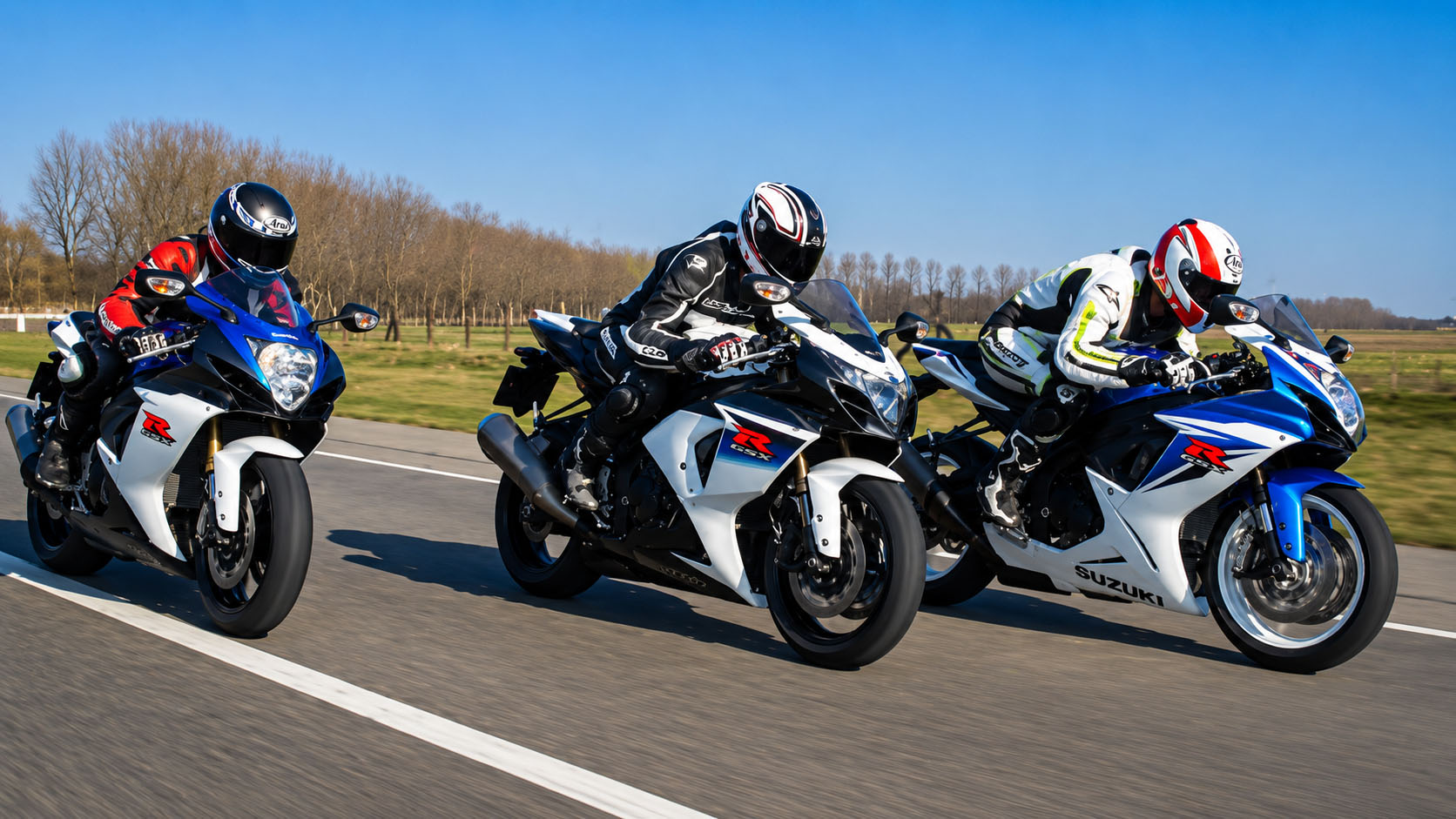
There is something that happens when you ride in a group that cannot be replicated alone. The shared rhythm of the pack. The unspoken communication. The feeling that you are part of something larger than your solo commute. Group riding is where many riders discover that motorcycling is not just a mode of transport — it is a community.
But that community has rules. Some are written. Most are not. Understanding them before you show up to your first group ride is the difference between an experience that strengthens the pack and one that endangers it.
The Psychology of Riding Together
Solo riding offers freedom. Group riding offers something different — belonging.
Research into shared physical experiences consistently shows that performing challenging tasks alongside others increases bonding, trust, and a sense of shared identity. Motorcyclists have known this intuitively for decades. The riders who come back from a group tour aren't just tired — they're closer to strangers they've only known for three days than to colleagues they've worked alongside for years.
Why this happens on a motorcycle specifically:
- Every rider faces the same risks and conditions simultaneously
- Non-verbal communication through formation riding creates a shared language
- Rest stops, fuel stops, and mechanical issues become group problems with group solutions
- The route becomes a shared narrative — everyone experiences the same sweeping corner, the same dramatic view, at the same moment
Group rides also make individual riders better. Riding in formation requires a higher level of spatial awareness, smoother throttle and brake inputs, and more disciplined observation than solo riding. New riders who complete group rides consistently describe it as the fastest improvement to their overall skill level outside of a formal training course.
Staggered Formation: The Foundation of Safe Group Riding
The staggered formation is the standard configuration for group riding on open roads. It maximises visibility, maintains safe following distances, and allows each rider a full lane-width of emergency space.
How Staggered Formation Works
Position 1 (Lead Rider): Rides in the left third of the lane (in left-hand traffic countries) or right third (in right-hand traffic countries).
Position 2: Rides in the opposite third of the lane, one second behind Position 1.
Position 3: Returns to the same side as Position 1, two seconds behind Position 1.
This creates a diagonal offset where each rider has a clear view ahead past the rider in front, and a full lane-width of empty road beside them as an emergency escape route.
Critical Spacing Rules
- Maintain a minimum 2-second following distance to the rider directly ahead of you in the same lane position
- Never ride directly alongside another rider — if either bike goes down, you have no escape
- In poor visibility, rain, or heavy traffic, increase spacing to 3–4 seconds
- Never compress the formation to close gaps — if the pack stretches out, trust the process
When to Switch to Single File
Staggered formation is not appropriate in all conditions. Switch to single file for:
- Sharp corners and technical mountain roads
- Narrow lanes or country roads
- Construction zones
- Overtaking manoeuvres
- Any situation where visibility is severely reduced
The Lead Rider signals the switch; the pack follows.
Hand Signals Every Rider Must Know
Intercoms are common but not universal. Every rider in every group must know these signals regardless of communication technology:
| Signal | Meaning |
|---|---|
| Left arm extended straight out | Turn left |
| Right arm extended straight out | Turn right |
| Left arm raised, elbow bent 90° upward | Turn right (alternative) |
| Left arm angled down, palm backward | Slow down |
| Left arm raised, fist closed | Hazard / stop ahead |
| Left arm pointing down, finger extended | Road hazard on left |
| Right arm pointing down, finger extended | Road hazard on right |
| Left arm raised, palm open, waving downward | Pull over / stop |
| Circular motion with left arm | Fuel stop needed |
| Left hand patting top of helmet | Police ahead |
| Left arm raised with two fingers extended | Single file |
| Left arm raised with fingers spread | Staggered formation |
These signals pass backward through the pack — each rider sees the signal from the rider ahead and repeats it for the rider behind. This chain communication ensures the signal reaches the Tail Gunner even if it originates at the front.
Pack Hierarchy: Lead Rider and Tail Gunner
Every group ride has two critical roles. They carry specific responsibilities that the rest of the pack relies on.
The Lead Rider (Point)
The Lead Rider is not simply the fastest rider or the most experienced. They are the route planner and the group's eyes:
- Knows the route completely before departure — no navigation uncertainty while moving
- Sets the pace for the whole group — not the pace they'd ride solo, but the pace the slowest competent rider can maintain comfortably
- Signals all hazards, turns, and stops in advance with sufficient lead time for the information to propagate to the back
- Never accelerates away from the group — if a gap opens, the Lead Rider slows to allow the pack to reform, not the pack racing to catch up
- Waits at all turns — stops at every junction and waits until the Tail Gunner's signal confirms the whole group is through before proceeding
The Tail Gunner (Sweep)
The Tail Gunner rides last and is the pack's safety net:
- Never overtakes any other rider — always maintains last position
- Assists any rider who has a mechanical issue, crash, or needs to stop — the Lead Rider continues to keep the group together while the Tail Gunner manages the situation
- Signals to the Lead Rider (typically via intercom or a pre-agreed signal) when the whole group is clear of a junction or hazard
- Carries a basic tool kit and knows basic first aid
- Should be an experienced, calm rider — not assigned by default to whoever shows up last
The Unwritten Rules
Beyond the mechanics, group riding has a culture. These aren't published anywhere — they're passed down:
Don't show up cold. Check your tyre pressure, fuel level, and oil before the meeting point, not at it.
Your pace is not the group's pace. If the group is moving slower than you'd ride alone, accept it. You chose to ride in a group.
No heroics at the back. The riders at the rear often have the most technical challenge — limited visibility, changing road conditions from traffic ahead, reduced time to react. This is not the place for overtaking other pack members.
Fuel when the group fuels. Do not skip a fuel stop because you have range. The group moves together.
Mechanical issues are group issues. No rider gets left alone on the roadside. The Tail Gunner stays; the Lead Rider is informed; the group waits or returns.
Thank the organisers. Planning a group route is significant work. Acknowledge it.
Finding Your First Group Ride
Most regions have active motorcycle clubs, online communities, and charity ride organisations running structured group events. If you're new, introduce yourself to the Lead Rider before departure and mention your experience level. Any competent Lead Rider will factor this in when setting pace and position.
The first group ride is often the one that transforms motorcycling from a personal habit into a lifelong community.