The Cross-Border Nomad: Motorcycle Riding Etiquette Across Cultures
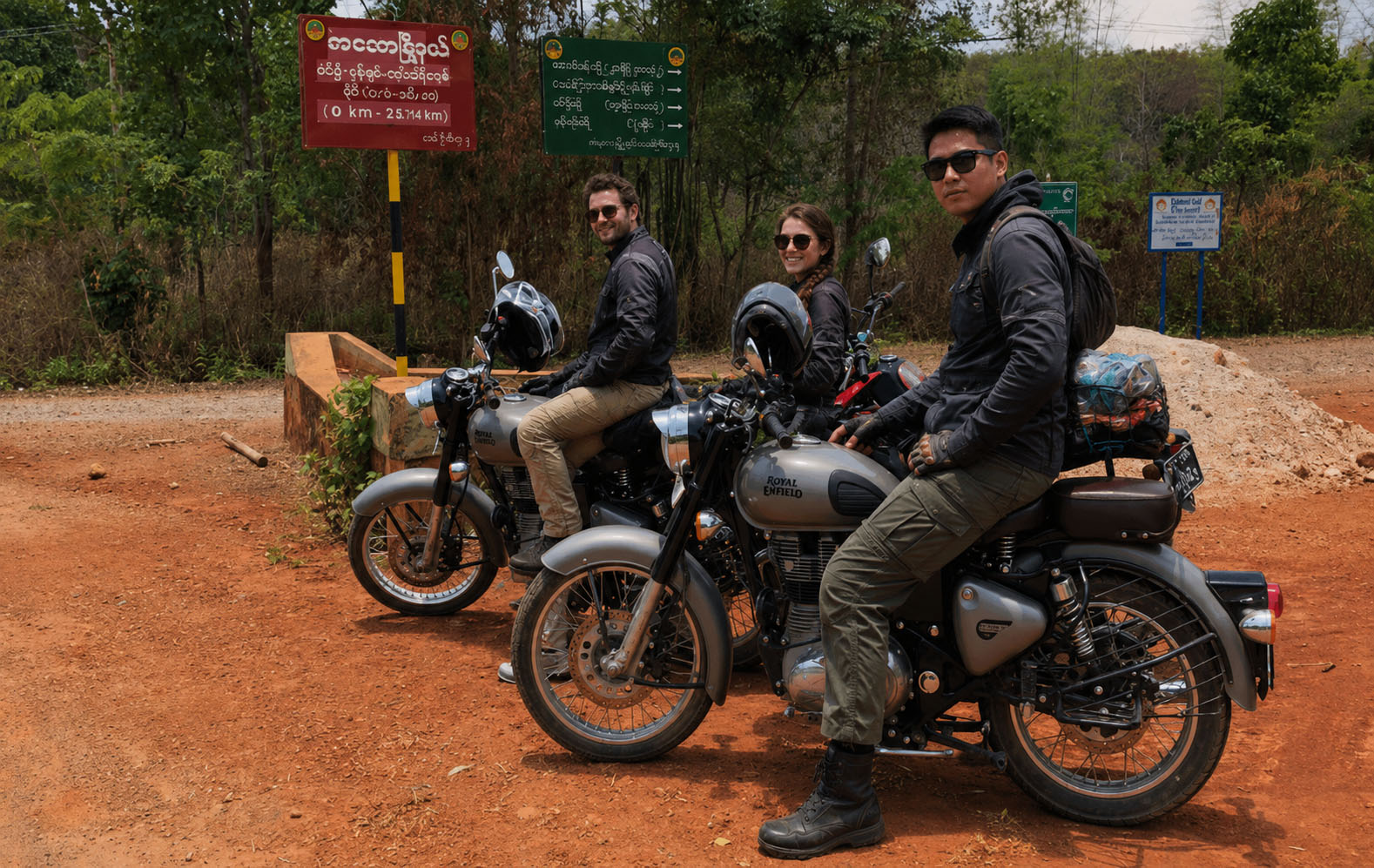
Crossing a border on a motorcycle is not like crossing it in a car. You are exposed. Every official, every local, every other road user can see exactly what you are, where you are probably going, and how far from home you are. This vulnerability is, paradoxically, one of the reasons cross-border motorcycle travel creates such disproportionately vivid experiences.
But vulnerability is manageable. The riders who move smoothly through diverse riding cultures are not the ones with the best gear or the fastest machines. They are the ones who paid attention — to how roads work in a given place, how other riders communicate, and what respect looks like when you are the foreigner passing through.
The Universal Language of the Road Wave
The motorcyclist wave — left hand briefly extended toward an oncoming rider — is one of the few genuinely global gestures. It crosses languages, cultures, and political borders. It says: I see you. We share something.
But it is not universal in form. Understanding regional variations prevents the awkwardness of an enthusiastic wave going unreciprocated:
In much of Europe and North America: The classic low wave — left hand dropped below the bar, two fingers extended, a brief acknowledgment.
In the UK: A more restrained nod of the helmet is common; an extended wave can seem over-familiar.
In Southeast Asia: The wave culture is less established among motorcyclists — mopeds and scooters are working transport rather than lifestyle vehicles, and the volume of two-wheeled traffic makes acknowledging every rider impractical. Don't be offended by the absence of reciprocation.
In Australia: Enthusiastic, even theatrical wave culture, especially in rural areas. Being the person who doesn't wave back is remembered.
In much of Africa and Latin America: Waves from locals often mean something specific — either genuine acknowledgement or, occasionally, a signal to stop. Context and road type determine interpretation.
How Road Rules Work When the Rulebook Doesn't Apply
Every motorcycle traveller eventually encounters a road environment where the written rules are theoretical and the actual rules are communicated through behaviour, horns, and the physics of proximity.
Flow, Not Rules
In high-density urban environments across South and Southeast Asia, the fundamental operating principle is flow. Traffic moves like a fluid, occupying available space continuously. The role of the horn is informational rather than aggressive — it says I am here rather than you are wrong. Entering this system requires a psychological shift: stop trying to identify who has right of way (the answer is often ambiguous) and start maintaining smooth, predictable movement.
Jerky, stop-start riding creates disruption. Smooth constant motion allows other riders to route around you. The paradox of high-density Asian traffic is that it works because everyone is moving rather than stopping.
Eastern Europe and the Balkans
Road culture here sits between Western European formality and the improvised logic of developing-world traffic. Speed limits are treated as approximate. Passing on blind bends is common. Rural roads may be excellent tarmac or sudden rubble with no warning.
What works: ride defensively, assume oncoming traffic will occasionally appear in your lane, and match the general tempo of traffic rather than riding to a Northern European standard that other road users are not observing.
North Africa
The transition from European riding standards to North African conditions is sharp. Morocco and Tunisia are the most accessible entry points, and both require an adjustment to:
- Animals on roads — particularly at dawn, dusk, and night. Goats, donkeys, and camels are not predictable and are extremely dangerous at speed.
- Surface variation within a single road — what appears to be tarmac in good condition may be tarmac over deep sand in the next corner
- Fuel stop strategy — plan fuel much more conservatively than European maps suggest. Some indicated routes cross regions where fuel availability is unreliable.
Border Crossing Protocol
Border crossings are one of the defining experiences of international motorcycle travel — and one of the most variable. The same border can be a 15-minute formality or a 3-hour exercise in bureaucratic archaeology depending on the day, the official, and the phase of the moon.
Universal principles that help:
Arrive with everything organised. Have your passport, carnet (if required), insurance, and registration in a single waterproof folder, accessible without unpacking the bike. Officials who have to wait while you disassemble your luggage begin the interaction with reduced goodwill.
Switch off the engine. Arriving with a running engine in a border compound communicates disrespect. Switch off, remove your helmet, and make eye contact before doing anything else.
Never argue. If an official asks for something irregular, the correct response is patient, calm inquiry — not indignation. "I'm not familiar with this requirement — can you show me where it's written?" is vastly more effective than any form of resistance.
Have small denomination local currency available on each side. Some crossings have legitimate fees; others have officials with creative interpretations of fee structures. The ability to pay a small amount without negotiation frequently accelerates proceedings.
The carnet de passages: Required for many countries in Asia and Africa. Issued by your national automobile association, it acts as a temporary import permit. Without it, customs may hold the bike. With it, the crossing is typically routine. Apply at least 6–8 weeks before departure.
Cultural Respect on the Road
Beyond traffic mechanics, cross-border touring involves moving through communities that have specific customs around hospitality, privacy, and the presence of strangers.
In rural communities, stop invitations are genuine. Across Central Asia, the Middle East, and much of Sub-Saharan Africa, an invitation to share tea or a meal from a stranger at the roadside is sincere. Declining politely is acceptable; treating it with suspicion is not. The hospitality culture in many of these regions is older and more foundational than anything you will encounter in Western Europe.
Photograph with permission. A camera pointed at a person without acknowledgement is rude in most cultures and can be genuinely offensive in some. Making eye contact, miming the camera, and waiting for a nod takes three seconds and produces better photographs — subjects who have consented are different from those who haven't.
Dress matters at borders and in communities. Full riding gear is understood everywhere. Casual clothing that would be unremarkable at home may be inappropriate in conservative communities. Having a lightweight overshirt or trousers to pull on when entering a village or town costs nothing and communicates awareness.
The Returning Traveller Effect
There is a consistent report from riders who return from extended cross-border tours: their domestic road behaviour changes. They become more patient, more aware of other road users, more comfortable with uncertainty.
This is not coincidental. Months of navigating traffic systems where the rules are unclear forces the development of genuine spatial awareness, anticipatory riding, and the ability to read intent from body language and vehicle movement. These are transferable skills.
The cross-border motorcycle journey is, among other things, the most efficient riding school that exists. The exam is continuous and the consequences of failure are real. This is, for those who have done it, part of the appeal.
Go somewhere the road doesn't match your expectations. Come back a better rider.