The World's Greatest Custom Motorcycle Shows and the Builders Behind Them
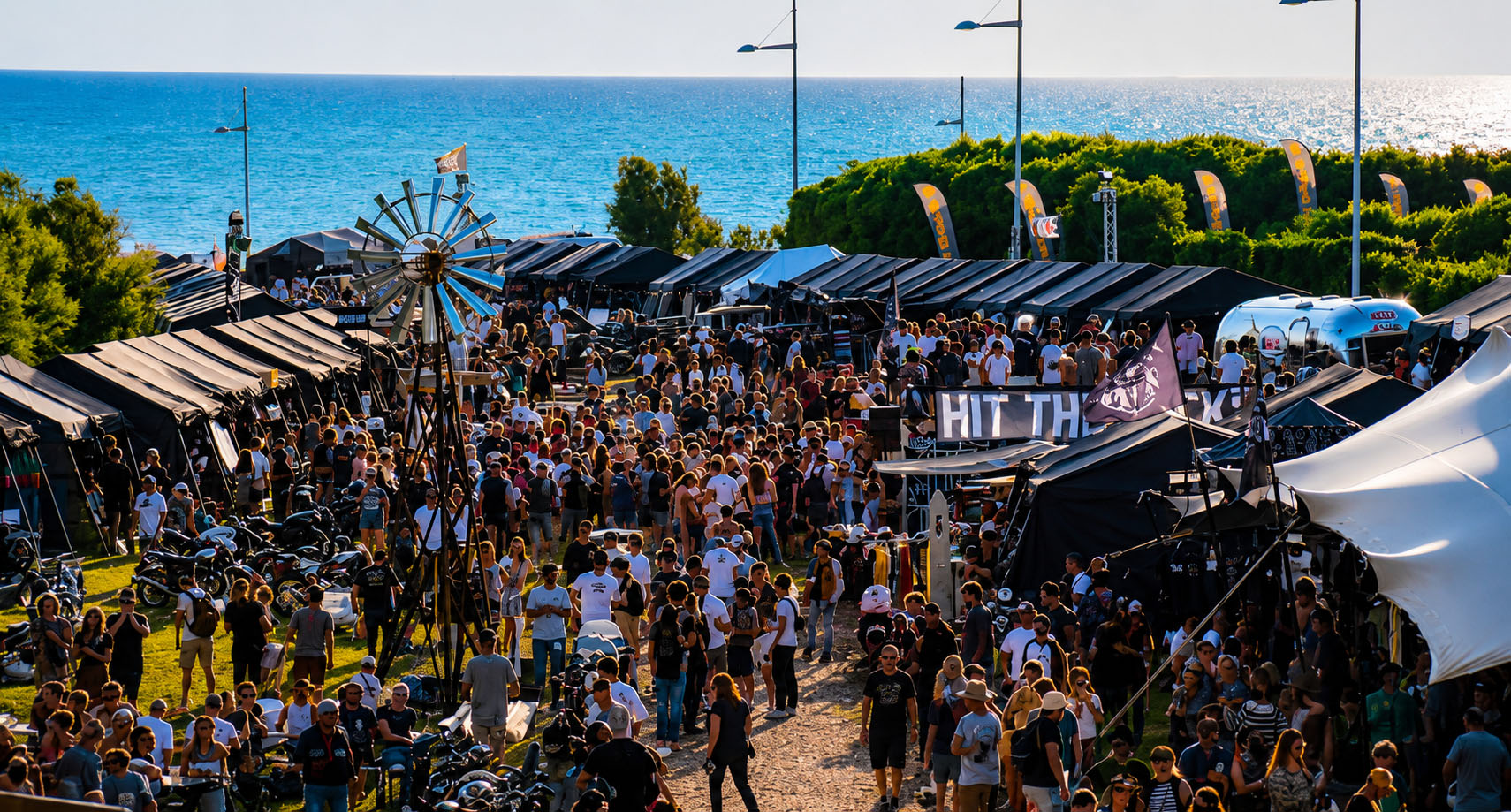
There is a moment that happens at every serious custom motorcycle show. You push through the crowd, clear the last group of people blocking your line of sight, and find yourself face to face with a machine that genuinely stops you. Not because of its cost or its horsepower specification, but because another human being — with tools, time, and a specific vision — made something that did not exist before.
That moment is why people fly across continents to attend these events. The custom motorcycle world is small enough that the builders attend their shows. The same person who spent three months fabricating that fuel tank is standing three metres away, wearing paint-stained jeans, talking to anyone who asks.
Why Custom Motorcycle Shows Matter
The factory motorcycle market has grown progressively capable and progressively convergent. Modern motorcycles are extraordinarily refined — the engineering, electronics, and performance are beyond anything achievable a generation ago. But a consequence of optimisation is similarity. The best-selling bikes in every segment look, ride, and age together.
Custom builders operate outside this logic. They start with a machine — often old, often broken — and make it singular. Not better in any measurable sense. Just impossible to mistake for anything else.
Custom shows are where this work is validated, critiqued, and celebrated. They are also where trends originate. The scrambler aesthetic that spread to every major manufacturer's lineup in the 2010s was already mature in the custom community years before anyone at a factory noticed.
The Essential Events Calendar
Wheels & Waves — Biarritz, France (June)
The event that best captures what happens when motorcycle culture intersects with surf culture and Basque country aesthetics. Wheels & Waves is not primarily a competition show — it is a gathering, with group rides through the mountains, a surf competition, and an exhibition of bikes that read more like art objects than vehicles.
The event attracts builders from across Europe and increasingly from Japan and the United States. Its aesthetic is distinctive: raw, purposeful, influenced by French and Basque sensibilities. The machines tend toward the functional over the decorative. This is not a chrome-and-polish show.
The Handbuilt Motorcycle Show — Austin, Texas (April)
Held annually at the Mexic-Arte Museum during MotoGP weekend at Circuit of the Americas, the Handbuilt Show is invitation-only — curated rather than open-entry. This produces a consistently exceptional level of work.
Founded by Revival Cycles in 2014, the Handbuilt Show has become the reference point for the American custom scene. The venue is genuine art-show quality: bikes on polished concrete floors under gallery lighting, presented without clutter. The curation means every bike in the room earns its place.
Glemseck 101 — Stuttgart, Germany (September)
The Glemseck 101 takes its name from Bundesstraße 101 — a straight stretch of road near Stuttgart that has hosted sprint racing since the 1950s. The modern event combines a custom show with actual racing: straight-line sprints on machines that are ridden, not just displayed.
This functional philosophy — the belief that a custom motorcycle should move — distinguishes Glemseck from purely show-oriented events. The crowd reflects this. German engineering culture meets custom craft in a way that produces distinctive, technically rigorous machines.
The Distinguished Gentleman's Ride — Worldwide (October)
Not a competition or a curated show, but the largest organised custom ride in the world — taking place simultaneously in hundreds of cities across six continents on a single Sunday each year. Entry is open to classic and custom motorcycles; riders dress in period or smart attire. The event raises funds for prostate cancer research and men's mental health.
The DGR is remarkable for its scale and accessibility. The 2023 edition raised over $10 million globally from a single riding day. The custom and classic motorcycle community has adopted it as an annual moment that simultaneously celebrates the culture and serves a purpose beyond itself.
Motor Bike Expo — Verona, Italy (January)
The largest custom motorcycle show in Europe by attendance, held in the vast Veronafiere exhibition halls each January. Over 140,000 visitors across three days, with thousands of bikes spanning every substyle of the custom world — from high-end bespoke builds to grassroots garage projects.
The Italian audience brings particular appreciation for craft and aesthetics. The show is less curatorially selective than the Handbuilt Show but captures a broader cross-section of what the European custom scene is actually producing.
The Builders Shaping the Scene
Deus Ex Machina (Sydney / Milan / Los Angeles)
Perhaps the single most influential custom builder in the modern era — not because of the machines themselves, but because of the cultural framework Deus built around them. From a Sydney garage in 2006, Deus created a complete aesthetic universe: motorcycles, clothing, surf, coffee, and a specific visual language that became internationally recognisable.
The bikes themselves are consistently excellent — primarily Japanese platforms (Honda, Yamaha, Kawasaki) stripped and rebuilt with hand-fabricated components. But Deus's real contribution was demonstrating that custom motorcycle culture could be simultaneously authentic and commercially coherent.
Wrenchmonkees (Copenhagen)
Danish custom shop that has maintained a consistent level of output for over fifteen years, producing tracker and scrambler builds with a rigorous, clean aesthetic. The Wrenchmonkees approach emphasises function — the bikes are built to be ridden — and a restrained colour palette that reads as Scandinavian without being decorative.
Classified Moto (Virginia, USA)
John Ryland's Virginia workshop has built some of the most technically sophisticated and visually radical machines in the American custom scene. Classified Moto specialises in rebuilding worn-out Japanese bikes into machines that look like nothing that existed before — combining industrial materials, careful engineering, and an anti-nostalgia aesthetic that refuses easy period referencing.
Hookie Co. (Nuremberg, Germany)
A relatively recent builder who has rapidly become one of the most-referenced names in the international custom scene. Hookie Co. works primarily with BMW platforms and produces work that is simultaneously technically demanding and visually distinctive — the bikes look engineered rather than styled, which is a harder thing to achieve.
What Custom Shows Reveal About the Future
The custom scene has always been early. Tracker-style builds were dominant in the custom world for five years before Ducati launched the Scrambler. Café racer aesthetics were being produced by small workshops a decade before every major manufacturer offered a factory version.
The shows are currently producing substantial interest in electric customs — builders taking EV drivetrains and creating machines that are charged with character rather than nostalgia. Whether mainstream manufacturers follow this direction will be visible in their model catalogues in approximately five years.
More fundamentally, the custom shows demonstrate something the mainstream motorcycle market occasionally loses sight of: people do not just want transportation. They want objects with soul — things made with intention, bearing the marks of human decision-making at every point. Machines that could not have been designed by algorithm, because they reflect a specific person's response to a specific problem.
That impulse does not go away. It just moves to wherever the space still exists to honour it.