Neo-Retro Scramblers: Classic Aesthetics Meet Modern Performance
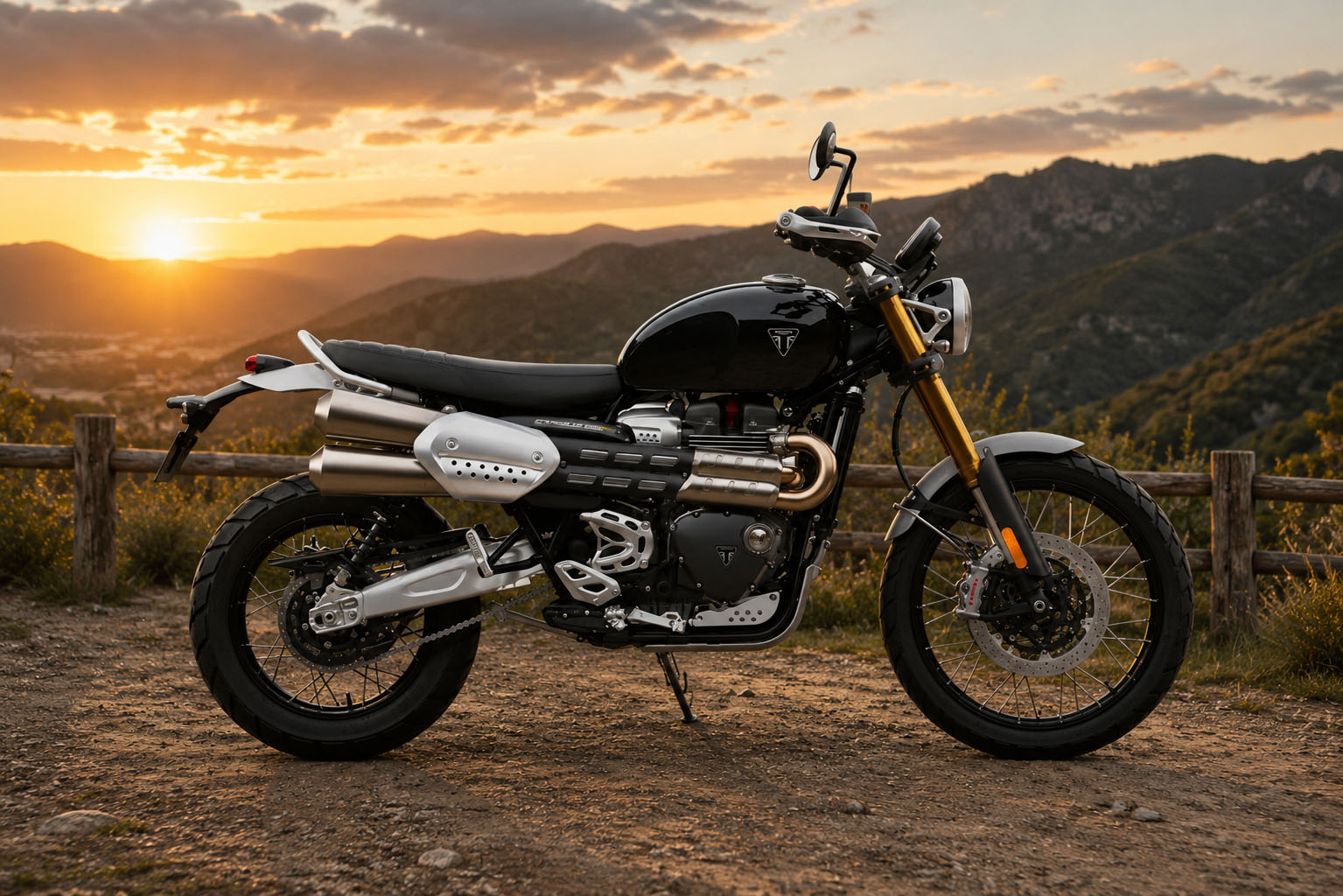
In 1960s California, motorcycle racers stripped production bikes down to bare essentials, raised the exhaust pipes to clear desert terrain, fitted knobbly tyres, and went racing across the high desert. The machines they built — scramblers — were honest, purpose-built, and beautiful in the way that functional things become beautiful when every element serves a reason.
Sixty years later, virtually every major manufacturer offers a scrambler in their lineup. The segment has become one of the most commercially successful in motorcycling — yet the machines look more like their 1960s ancestors than the competition-focused originals ever did. Understanding why requires examining what the scrambler really sells.
What Defines the Scrambler Aesthetic
The scrambler look is defined by a consistent set of visual elements. These are not arbitrary design choices — each originated as a functional modification:
High-Mount Exhaust
The original functional rationale: ground clearance for off-road use. An exhaust pipe running low along the frame would ground out on rocks, roots, and terrain changes. Routing it high — tucked alongside the engine or running up the side of the frame — eliminated this vulnerability.
On a modern road-oriented scrambler, the high-mount exhaust serves primarily as a visual identifier. The practicality is vestigial. The aesthetic remains so strongly associated with the scrambler identity that it is a near-mandatory design element.
Spoked Wheels
Wire-spoked wheels are more forgiving of off-road impacts than cast alloy — the spokes flex and absorb shock rather than transferring it rigidly to the rim. On rough terrain, a spoked wheel is more durable and repairable than cast alternatives.
Modern scramblers retain spokes as a design element. Many are not tubeless, which is a genuine functional limitation (tubeless tyres can be ridden briefly after a puncture; tubed tyres cannot). The spoked wheel is both a connection to the heritage and, depending on use case, a genuine capability.
Knobby Dual-Sport Tyres
The mixed-tread or knobby tyre provides grip on loose, unpredictable surfaces at the cost of some road handling precision. Road tyres optimise contact patch geometry for tarmac; knobby tyres prioritise off-road bite, which means reduced contact patch on road and slightly vague high-speed behaviour.
Most factory scramblers ship with dual-sport or lightly knobby tyres — enough aesthetic reference to the off-road heritage without the extreme performance compromise of full knobby competition rubber.
Teardrop Tank and Upright Position
Scrambler silhouettes use a compact, rounded teardrop tank inspired by 1960s British singles. The riding position is upright — wider bars than a naked sportbike, midway footpeg placement, and a seat height typically 800–840mm designed for an active, standing-friendly position.
Off-Road Capability vs. Street Reality
The marketing of modern scramblers is careful to imply off-road adventure while avoiding specific off-road performance claims. There is a reason for this.
What They Do Well Off-Road
Gravel tracks, fire roads, and light trail: A Ducati Scrambler 1100 or Triumph Scrambler 1200 handles unpaved roads confidently. Ground clearance is adequate for light terrain, dual-sport tyres provide grip on loose surfaces, and the upright riding position offers the control authority that a sportbike posture doesn't.
Urban mixed-surface riding: Kerbs, cobbles, tram tracks, and wet surfaces are where the scrambler genuinely distinguishes itself from road-only alternatives. The combination of tyre choice and suspension tuning makes it more composed on imperfect urban surfaces than a naked bike.
Where They Reach Their Limits
Suspension travel: A genuine off-road machine has 250–300mm of suspension travel. Most scramblers provide 150–180mm. This is adequate for the first two categories above; it limits capability in anything approaching actual enduro terrain.
Weight: The Triumph Scrambler 1200 XE weighs 218 kg. The BMW R nineT Scrambler is 222 kg. These are not machines that can be picked up easily after a tip-over in soft terrain. The authentic light scrambler of the 1960s weighed 120–140 kg.
Tyre sidewall: Spoked wheels with tube-type tyres are not tubeless-compatible without conversion. A puncture in a remote location is more consequential than on a machine with tubeless rubber.
The honest characterisation: modern scramblers are excellent road machines with genuine light off-road capability. They are not dual-sport machines capable of sustained difficult terrain. The gap between scrambler marketing imagery (mountain passes, river crossings, desert tracks) and scrambler engineering reality (medium-travel suspension, heavy kerb weight) is significant.
The Market Leaders
Ducati Scrambler Range
The Ducati Scrambler relaunched the category in 2015 and remains the reference point for entry-to-mid level scramblers. The 800cc Desmodue L-twin engine is characterful, torquey, and deliberately approachable. The range spans from the Urban Motard (street-focused, supermoto-influenced) to the Desert Sled (higher suspension, longer-travel, most credibly off-road capable).
The Scrambler range's defining quality is accessibility. Nothing about a Ducati Scrambler 800 is intimidating — it is genuinely easy to ride well, which makes it popular with experienced riders who want enjoyment over challenge as much as with newer riders building confidence.
Triumph Scrambler 1200
The Scrambler 1200 sits at the serious end of the market. Two variants: XC (street-focused) and XE (off-road capable, with higher suspension, longer travel, and genuine Dakar-era credibility). The 1200cc parallel twin produces 90 bhp with broad torque, and the XE's 200mm ground clearance and 250/230mm suspension travel approach genuine light trail capability.
For riders who want the scrambler aesthetic without sacrificing street performance or genuine off-road ambition, the Scrambler 1200 XE is the benchmark.
Royal Enfield Himalayan and Scram 411
Royal Enfield has repositioned its product range around accessible adventure and scrambler platforms. The Scram 411 is an honest, relatively lightweight (185 kg) scrambler aimed at riders who want functional off-road capability without flagship-level price. Its 411cc single-cylinder engine prioritises usability over performance, and the price point (approximately $5,500) significantly undercuts European competition.
Aftermarket Potential
The scrambler's simplified aesthetic makes it one of the most customisable segments in motorcycling. Key modifications:
- Exhaust systems: High-mount aftermarket exhausts are available from numerous suppliers for every major platform
- Seat modification: Flat tracker and solo seat conversions are straightforward on scrambler frames
- Bar and footpeg repositioning: Widely available to dial in riding position
- Tyre upgrade: Moving to more aggressively knobbly tyres significantly changes the off-road character at modest cost
The scrambler platform rewards personalisation in a way that factory-optimised sportbikes do not — and the resulting diversity in the segment means that two owners of the same base model can end up with visually and functionally distinct machines.