The Evolution of the Modern Adventure Motorcycle (ADV)
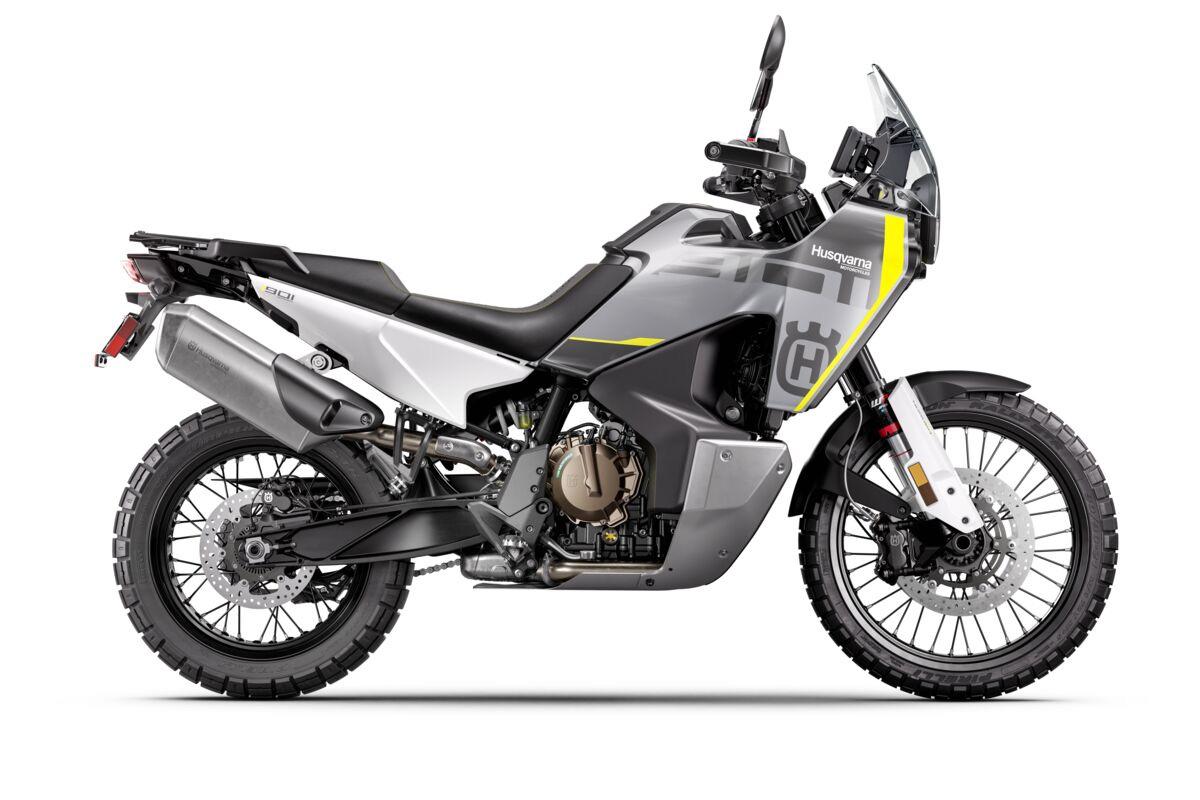
Few motorcycle categories have transformed as dramatically as the adventure bike. In four decades, the ADV has evolved from a modified enduro racer stripped for desert crossing into a technological showpiece carrying cornering ABS, active suspension, satellite navigation, and heated grips as standard equipment. Understanding how this happened explains why the modern ADV is both the most capable and the most complex motorcycle category in the market.
Genesis: The Rally Racing Catalyst
The ADV category traces its origins to one event: the Paris-Dakar Rally, established in 1979. The original race demanded machines that could cover thousands of kilometres of African desert under race conditions — requiring genuine off-road capability, high fuel range, and mechanical robustness that standard production bikes couldn't provide.
BMW responded in 1980 with the R 80 G/S — a production bike built around the lessons of rally preparation. Air-cooled boxer twin engine, high ground clearance, long-travel suspension, and a large fuel tank. The G/S designation stood for Gelände/Straße (off-road/road), and it defined the category's fundamental promise: one machine for both surfaces.
The R 80 G/S was not a refined touring machine. It was loud, vibrated at motorway speeds, and rewarded capable riders while punishing inattentive ones. But it worked. It crossed the Sahara. And a generation of riders noticed.
The Lightweight Era: 1980s–1990s
Early ADV evolution ran in two directions simultaneously. Factory rally machines became increasingly specialised — 600cc single-cylinder thumpers with massive fuel tanks, stripped of every gram unnecessary for racing. The Honda XRV 750 Africa Twin (1988) represented the production end of this thinking: a parallel twin with genuine off-road capability, lighter than the GS, purpose-built for distance.
What defined this era:
- Air or oil-cooled single and twin-cylinder engines for simplicity and field-repairability
- Manual carburettors (self-serviceable with basic tools in remote locations)
- Conventional suspension without electronics
- Relatively modest power — 50–70 bhp was typical
- Low kerb weight — most machines under 200 kg wet
The philosophy was durability over sophistication. These were tools for people who intended to use them far from support infrastructure.
The Technology Inflection: 2000–2015
The transition from utilitarian dual-sport to technology-laden tourer began with the BMW R 1150 GS (1999) and accelerated sharply through the 2000s. Several forces converged:
Water cooling became necessary as emissions regulations tightened. Liquid-cooled engines run more efficiently and can be tuned more precisely than air-cooled units, but they add weight, complexity, and components vulnerable to damage in off-road use.
Displacement grew to meet touring ambitions. The 1200cc class offered motorway comfort and long-range cruising ability that smaller singles and twins struggled to provide. Riders were increasingly using ADV bikes as primary long-distance tourers, not dedicated off-road machines.
Electronics began entering the category — initially just fuel injection replacing carburettors, then ABS, then traction control. Each addition added capability on road at the cost of weight and complexity off road.
By 2010, the flagship ADV had split into a definitional contradiction: a machine marketed on off-road heritage and capability but primarily purchased for road touring with occasional light gravel use.
Modern Rider Aids: What They Actually Do
The electronics suite on a contemporary flagship ADV would be unrecognisable to the original GS engineers. Here is what is now considered baseline equipment in the 1200cc+ segment:
Cornering ABS
Standard ABS prevents wheel lock-up under braking in a straight line. Cornering ABS (BMW calls it MTC, KTM calls it Lean Angle ABS) uses IMU (inertial measurement unit) data to calculate lean angle and adjust intervention thresholds accordingly. Braking while leaned over without cornering ABS can trigger premature front wheel release; with it, the system modulates precisely to maintain grip through the corner.
Active Electronic Suspension (ESA/EERA)
Electronically controlled suspension adjusts preload, compression, and rebound damping in real time based on road surface inputs, speed, and acceleration/deceleration forces. On a machine like the BMW R 1300 GS with EERA (Electronically controlled Enduro/Road Adaptive suspension), the system reads road disturbances and responds within milliseconds — firming up under braking, softening for rough surfaces.
The practical result: A 250 kg fully loaded touring ADV that handles more like a 180 kg unladen machine because the suspension is continuously optimised rather than set to a static compromise.
Off-Road Traction Control Mapping
Modern ADV traction control systems offer multiple modes with different intervention thresholds. Off-road mode allows significantly more wheel spin before cutting power — necessary for gravel, sand, and mud where controlled wheelspin is traction management rather than a crash precursor. Road mode intervenes earlier. Rain mode intervenes earliest. Riders select the mode appropriate to the surface.
Choosing Your Platform: Middleweight vs. Flagship
| Middleweight 650–800cc | Flagship 1200cc+ | |
|---|---|---|
| Examples | Honda Africa Twin 750, KTM 790 Adventure, Triumph Tiger 900 | BMW R 1300 GS, KTM 1290 Super Adventure, Ducati Multistrada V4 |
| Kerb weight | 195–215 kg | 230–260 kg |
| Off-road capability | Genuinely capable, manageable when dropped | Capable electronically, physically demanding when dropped |
| Touring range | Good (standard: 250–350 km) | Excellent (standard: 350–450 km) |
| Motorway cruising | Comfortable to 130 km/h; vibration present above 150 km/h | Effortless at sustained high speeds |
| Price | $9,000–$13,000 | $16,000–$25,000+ |
| Electronics suite | Traction control, ABS, riding modes (standard or minimal electronic suspension) | Full IMU-based suite, active suspension, adaptive cruise, connectivity |
For genuine off-road use, the middleweight platforms are the honest choice. At sub-200 kg, they can be extracted from difficult situations by a solo rider. Above 230 kg, the electronics are doing the work — and if they can't, neither can you.
For high-mileage touring with occasional light gravel, the flagships are extraordinary machines. The sophistication is justified when the primary mission is covering thousands of kilometres efficiently and comfortably.
The ADV category's ongoing tension — between the original rally heritage and the current touring-biased market — is not a weakness. It is the reason both platforms exist. The question is which side of that tension your riding actually sits on.